-
Adaptive Design/
Urban Futures/
Urban Design
Repair as Design: Rethinking Urban Futures through Care
- Candice Lim
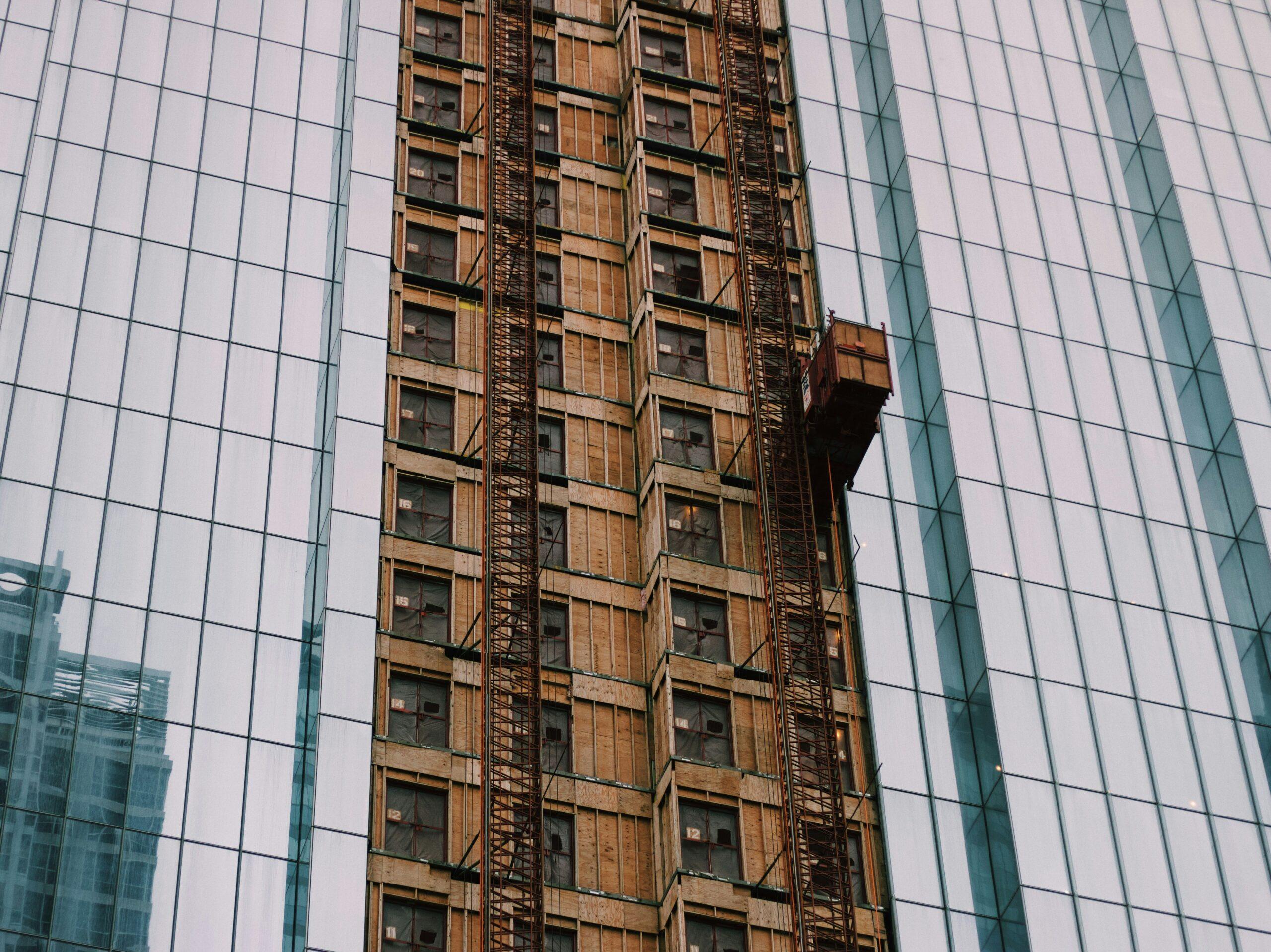
At first glance, cities appear to be built on bold gestures—the skyscraper that pierces a skyline, the gleaming transit line that promises efficiency, the new masterplan that rebrands a district. But walk a little slower, look a little closer, and another story emerges: the story of repair. Behind every façade of modernity lies a constant choreography of maintenance, mending, and care. Cities do not only grow through building; they endure through repair.
The Invisible Architecture of Maintenance
Repair work is often hidden, relegated to the night shift or back alley. Cracked pavements patched before commuters step out in the morning, water pipes replaced beneath the streets, informal wiring reconnected by residents after a blackout—these are the unglamorous acts that sustain urban life. Yet the language of city-making rarely acknowledges them. Urban design celebrates the “new,” while repair is treated as secondary, reactive, or even a sign of failure.
But what if repair itself is understood as design? What if the act of maintaining and adapting the urban fabric is not an afterthought, but a guiding principle for future cities?
Case Study 1: Jakarta’s Kampungs
In Jakarta, kampung neighbourhoods offer a vivid example of repair as a collective urban practice. In flood-prone districts like Kampung Akuarium, residents have long lived with cycles of inundation and rebuilding. After mass evictions in 2016, the community worked with architects and NGOs to co-design housing that could be incrementally repaired and adapted by residents themselves. This was not design for permanence, but design for continuity—a framework where maintenance, rebuilding, and adaptation are built into the architecture from the start (Jakarta Post, 2021; Leitner & Sheppard, 2022; World Habitat Awards, 2024). By 2023–2024, the project, known as Kampung Susun Akuarium (KSA), had achieved notable milestones, including the completion of additional blocks and recognition through awards like the Gold World Habitat Awards 2024 and the Innovation Awards 2023 in South Korea, highlighting its sustainable housing model with features like elevated structures and communal green spaces (World Habitat Awards, 2024; Asia Pacific Housing Forum, 2023; The Conversation, 2023). However, challenges persist: As of mid-2023, one block remained unfinished, with funding and construction delays creating ongoing issues for residents, underscoring the need for sustained investment amid Jakarta’s subsidence and flood risks (Tempo, 2023; Jakarta Post, 2021).
Case Study 2: Havana’s Culture of Resourcefulness
In Havana, decades of scarcity have created a repair culture that permeates daily life. Vintage American cars from the 1950s still weave through the city’s streets, kept alive by endless improvisation and hand-crafted parts. Buildings, too, are continuously repaired—sometimes precariously, sometimes ingeniously—through community networks of labour and resourcefulness. Here, repair is not simply functional; it is cultural, a shared act of resilience in the face of economic constraint (Coyula & Hamberg, 2002; The Guardian, 2024; Reuters, 2024). This ethos, rooted in the U.S. embargo since 1960, has been tested further in 2024–2025 by intensified crises, including nationwide blackouts, hurricanes like Oscar and Rafael, and infrastructure collapses that have strained repair efforts (AP News, 2024; Reuters, 2024; The Guardian, 2024; BBC, 2024; Al Jazeera, 2024; Havana Times, 2025). While community ingenuity persists—bolstered by initiatives like a 2025 China-Cuba collaboration to repair public buses—slow housing recovery (addressing only 50% of hurricane damage) and deepening inequalities highlight vulnerabilities, where private repairs outpace public ones (Reuters, 2024; The Guardian, 2024).
Case Study 3: Amsterdam’s Circular Futures
By contrast, Amsterdam has institutionalized repair within its vision of a circular economy. The city’s Circular 2020–2025 Strategy aims to ensure that buildings and infrastructure are designed for disassembly, reuse, and long lifespans (City of Amsterdam, 2020). Experiments with modular construction, material passports, and repair hubs show how design can anticipate maintenance, making care an embedded function rather than an afterthought (Circle Economy, 2024; City of Amsterdam, 2020; Metabolic, 2023). Progress through the 2023–2026 Implementation Agenda includes emissions savings equivalent to 30,000 homes switching to green energy, with open-access tools accelerating transitions (City of Amsterdam, 2023; Metabolic, 2023; Circle Economy, 2024). Yet, as of 2024–2025, high-impact solutions face underfunding, emphasizing the need for scaled investments to meet the 2030 goal of halving raw material use and the 2050 full circularity target (Circle Economy, 2024; Metabolic, 2023).
Repair as Philosophy
Shannon Mattern, in her essay “Maintenance and Care” (2018), argues that to study maintenance is itself an act of maintenance, a perspective that reframes design as inherently tied to ongoing care (Mattern, 2018). This view asks us to see repair not as evidence of decline, but as proof of vitality. A repaired bench, a repainted wall, or a rebuilt footbridge carries the patina of continuity, connecting past use with future possibility.
When framed this way, repair challenges the obsession with novelty that dominates urban futures. Rather than chasing ever more extravagant megaprojects, cities can learn to value the modest, incremental, and ongoing work of care. This is not only more sustainable—reducing carbon costs of demolition and new construction—but also more humane. Repair recognizes the lived reality of communities who cannot afford to wait for the next masterplan. However, it requires addressing practical hurdles like funding shortages and inequality to avoid overburdening vulnerable groups.
The Aesthetics of the Repaired City
There is also an aesthetic dimension. The Japanese philosophy of kintsugi, repairing broken pottery with gold, suggests that repair can reveal beauty, not erase damage. Cities, too, might embrace the visible marks of care: patched façades that tell stories, reconfigured streets that adapt to shifting needs, neighbourhoods where adaptation is celebrated rather than hidden.
Toward a Culture of Care
To think of repair as design is to see the city not as a finished product, but as a living system. It is to ask: how do we make our infrastructures easier to mend? How do we empower communities to care for their own spaces? How do we design with time—not only for the launch of a project, but for its everyday maintenance and its afterlives?
To achieve this, realistic steps include: (1) Conducting local policy audits to identify and incentivize repair-friendly regulations, such as subsidies for modular materials; (2) Partnering with NGOs and residents for training programs in community-led maintenance; (3) Implementing digital tools like material passports to track and facilitate reuse, ensuring transparency in supply chains (Circle Economy, 2024). Perhaps the future city is not the one that dazzles with the newest icon, but the one that endures with dignity because it has been cared for, again and again—even if that means navigating persistent challenges like economic constraints and climate impacts.
- Continue Reading