Future Atlas Digital; Contributed Story; Housing & Community
What Keeps a Home Working
Across Bangladesh and Hong Kong, people, partnerships and practical support shape how housing responds to everyday needs and changing conditions.
D. Johnson Rhenius Jeyaseelan, Salina Pradhan and Lubna Sharmin
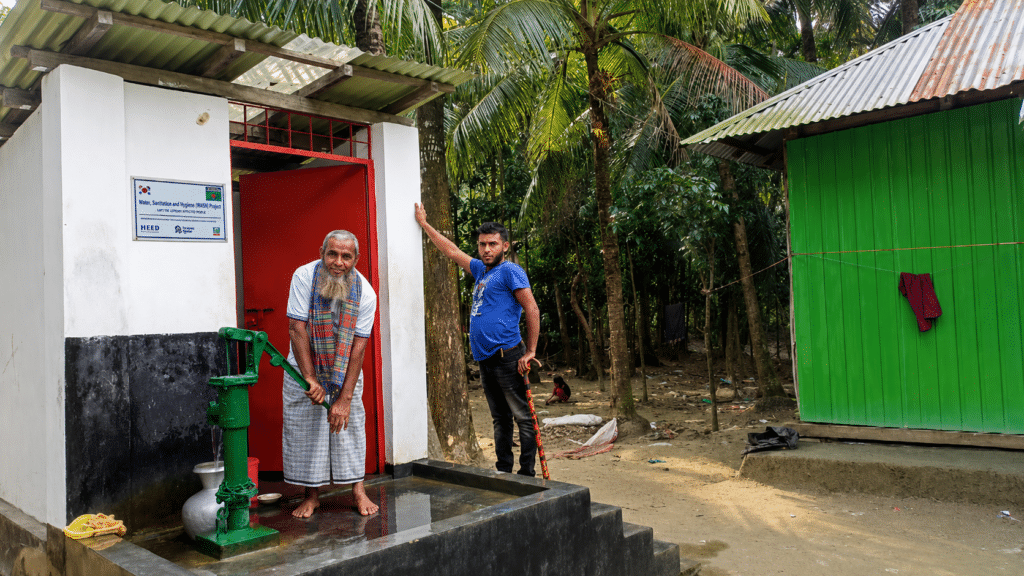
For years, the water Ali drew from a shallow tube well in his village in Noakhali, southeastern Bangladesh, looked clean. It was not safe. The well tapped groundwater contaminated by naturally occurring arsenic. Ali and about 20 neighbouring households relied on the same source, so the risk extended beyond his family. Ali, a 61-year-old farmer, said members of his family experienced recurring stomach illness and skin conditions during the years they relied on the well. Long-term exposure to arsenic in drinking water can cause skin lesions and other serious health effects.
Ali (left) using a hand pump at a facility near to his home with his son Robiul next to him in a village, Sadar upazila, in Noakhali on December 18, 2025. Image: Habitat for Humanity Bangladesh
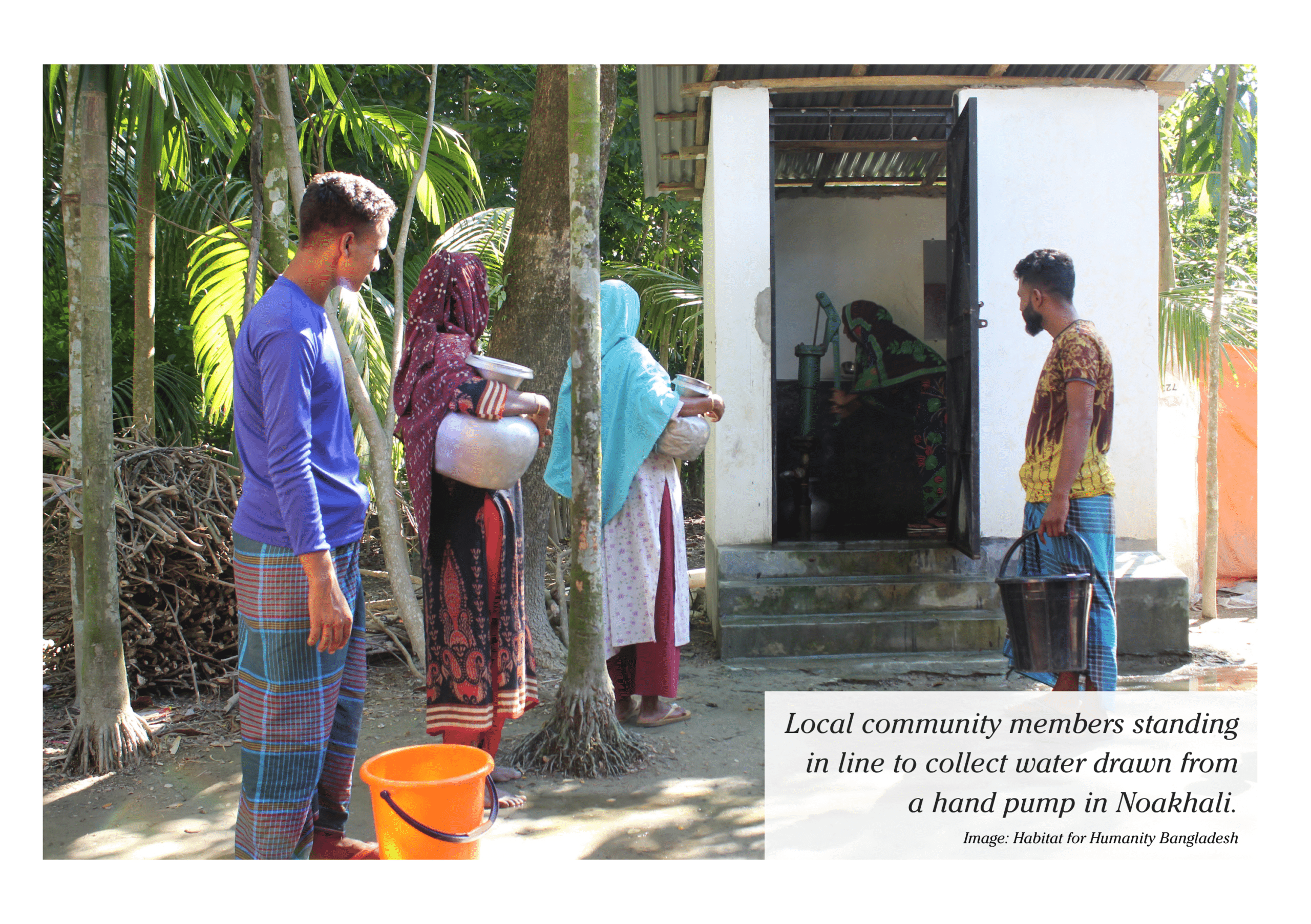
When safe water meant a longer walk, it was women and girls who made it. For Ali’s younger son Robiul, who has a mobility-related disability, distance was not an inconvenience but a barrier: fetching water meant asking someone else to do it for him.
In June 2025, a project led by Habitat for Humanity Bangladesh and implemented locally with HEED Bangladesh sank a deep tube-well handpump in Ali’s courtyard, reaching an aquifer below the contaminated layer, and built a bathing facility beside it. Twenty households now use both.
A dwelling is only as good as the systems around it: water a person can drink, sanitation a person can use, a route that someone with reduced mobility can manage, a decision-making process that asks households what they need, and—least visible and least often funded—an arrangement that keeps all of it working after the project team has gone.
D. Johnson Rhenius Jeyaseelan is Senior Specialist, Basic Services, at Habitat for Humanity’s Asia-Pacific Area Office. With more than 27 years in water, sanitation and hygiene and in emergency response, he supports basic services programming across the region, providing technical leadership in WASH, behaviour change and community-centred development.
Salina Pradhan is Senior Specialist, Habitability, at Habitat for Humanity’s Asia-Pacific Area Office. An architect with over eight years in housing and construction, she supports programmes strengthening housing quality and resilient communities, spanning architectural design, construction management, healthy housing and disaster-resilient construction across the Asia-Pacific region.
Lubna Sharmin is a Training and Capacity Building Officer at Habitat for Humanity Bangladesh, specialising in community development, capacity strengthening and stakeholder engagement. Her experience spans training coordination, project management and community mobilisation under donor-supported projects, with interests in WASH, climate-resilient housing and gender inclusion.