Interior surfaces carry colour, texture and atmosphere. Their deeper value emerges in use: how they wear, clean, absorb sound and support the life of a space.
Jean Leong
When we talk about growth in the built environment, floor area and project count tell only part of the story. I believe growth is no longer just about scale. It also has to describe the quality of what we build: whether a space remains useful, adaptable and valuable five, 10 or 15 years after it opens.
Interior surfaces are part of that answer. Wallcoverings, flooring, carpets, leather, acoustic treatments and digitally printed surfaces set the mood of a room. They also affect maintenance, comfort, wellbeing, user experience and long-term performance. A surface can look right and still be poorly matched to the life of the space. The better choice carries the design and does the work expected of it.
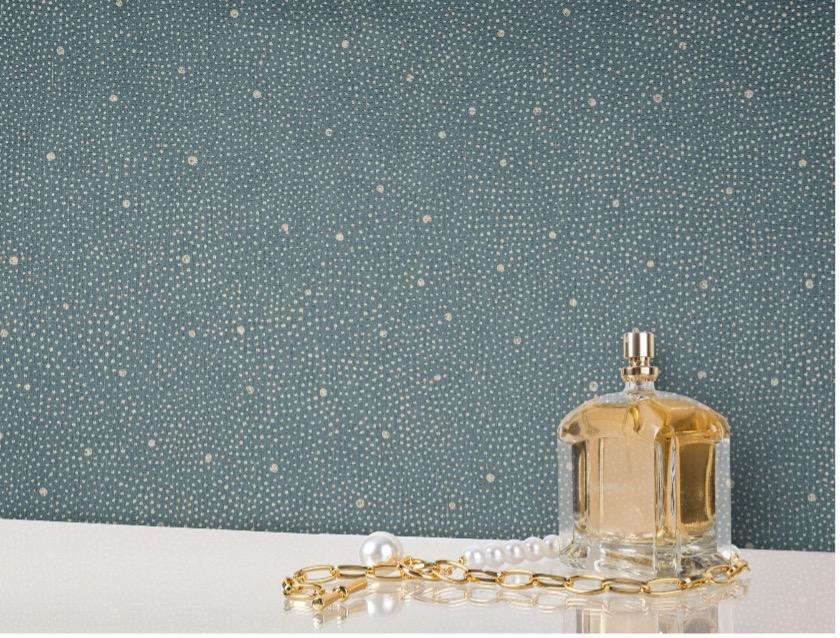
Sustainability that holds up in use: Koroseal embossed commercial wallcoverings. Image courtesy of Goodrich Global.
Sustainability That Holds Up In Use
Sustainability now appears in almost every project brief. Its value becomes clear when broad intentions are translated into questions that can be answered. Is the material responsibly sourced? Is it durable enough to avoid premature replacement? Does it support indoor wellbeing? What does it need to clean and maintain?
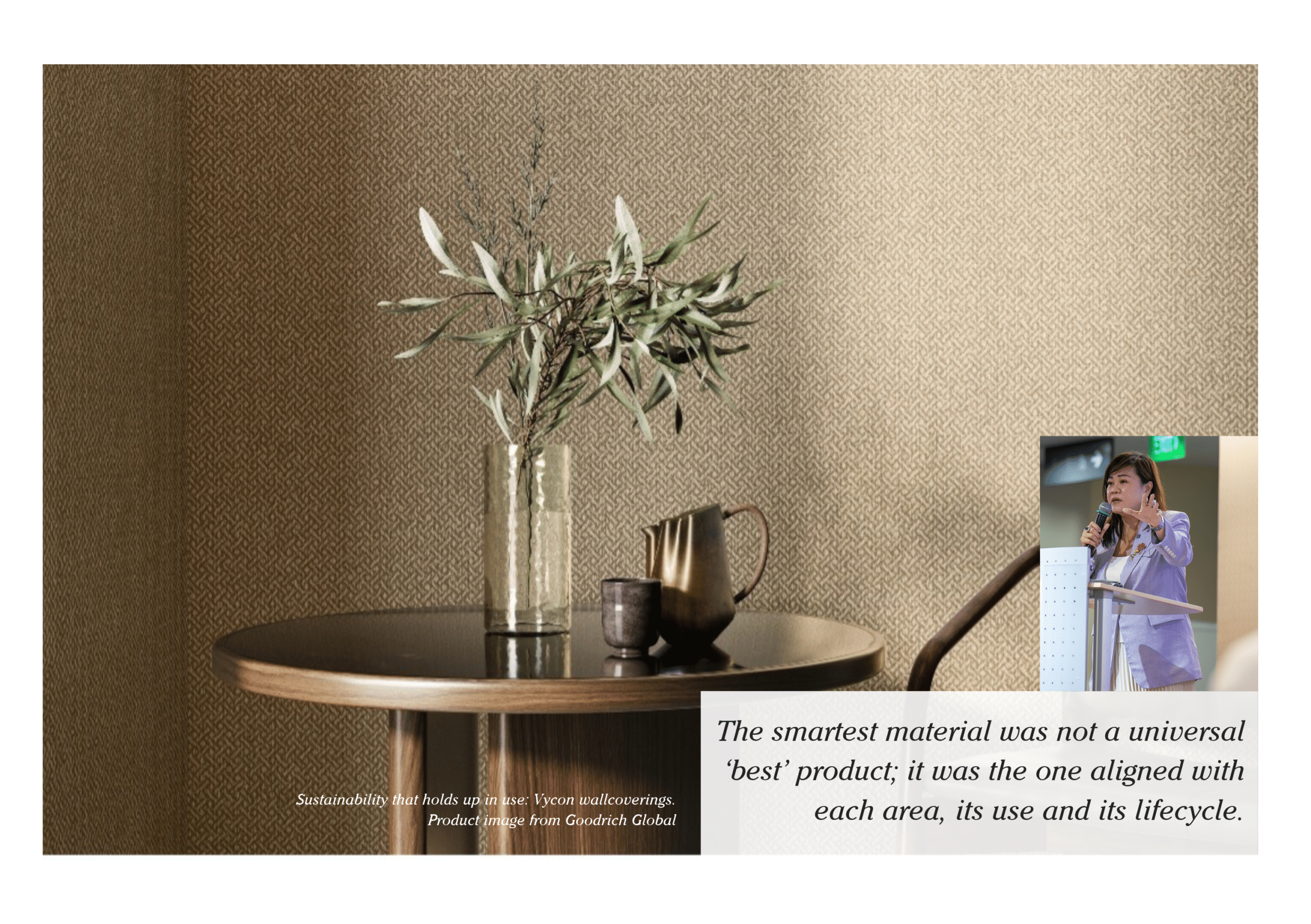
Selected American commercial wallcoverings brands distributed by Goodrich Global, for example, Vycon and Koroseal, are established brands engineered for demanding hospitality and commercial settings, with options that address low-VOC emissions and fire-rating requirements. Those qualities sit alongside colour, pattern and texture; they belong in the same specification conversation.
Third-party certification gives that conversation firmer ground. The specified J.Josephson Vycon wallcoverings shown at Connect-X carry a two-tick ‘Very Good’ rating under the Singapore Green Building Product (SGBP) certification scheme, valid to 17 June 2027. Goodrich Axminster wool carpet with SB latex unitary backing—covering the Abstract, Floral, Geometric, Sphere and Stroke models—carries the scheme’s four-tick ‘Leader’ rating, valid to 11 August 2028.
The Singapore Green Building Council describes SGBP as a voluntary, tiered scheme that evaluates the sustainability performance of building products using scientific and engineering principles. For a designer, specifier or owner, the value lies in having credible information to place beside the project’s other demands: application, appearance, installation, maintenance and useful life.
This is an excerpt of Jean’s article (adapted from her presentation at Connect-X 2026 ) published in Future Atlas 3Q 2026 digital edition. Read the full story there.
Jean Leong is Regional Head of Marketing & Branding Communications, Goodrich Global. With over 16 years of experience, Jean works with architects, developers, hospitality operators and designers across Asia to identify emerging trends in sustainability, technology and material innovation. She is passionate about translating global insights into practical solutions that support business growth and future-ready built environments.