From River System to Material System

More than simply a cleanup story, RiverRecycle is a test of whether polluted waterways can support a working recovery system. One that is tied to local labour, river conditions, and downstream material use, rather than to one-off environmental campaigns.
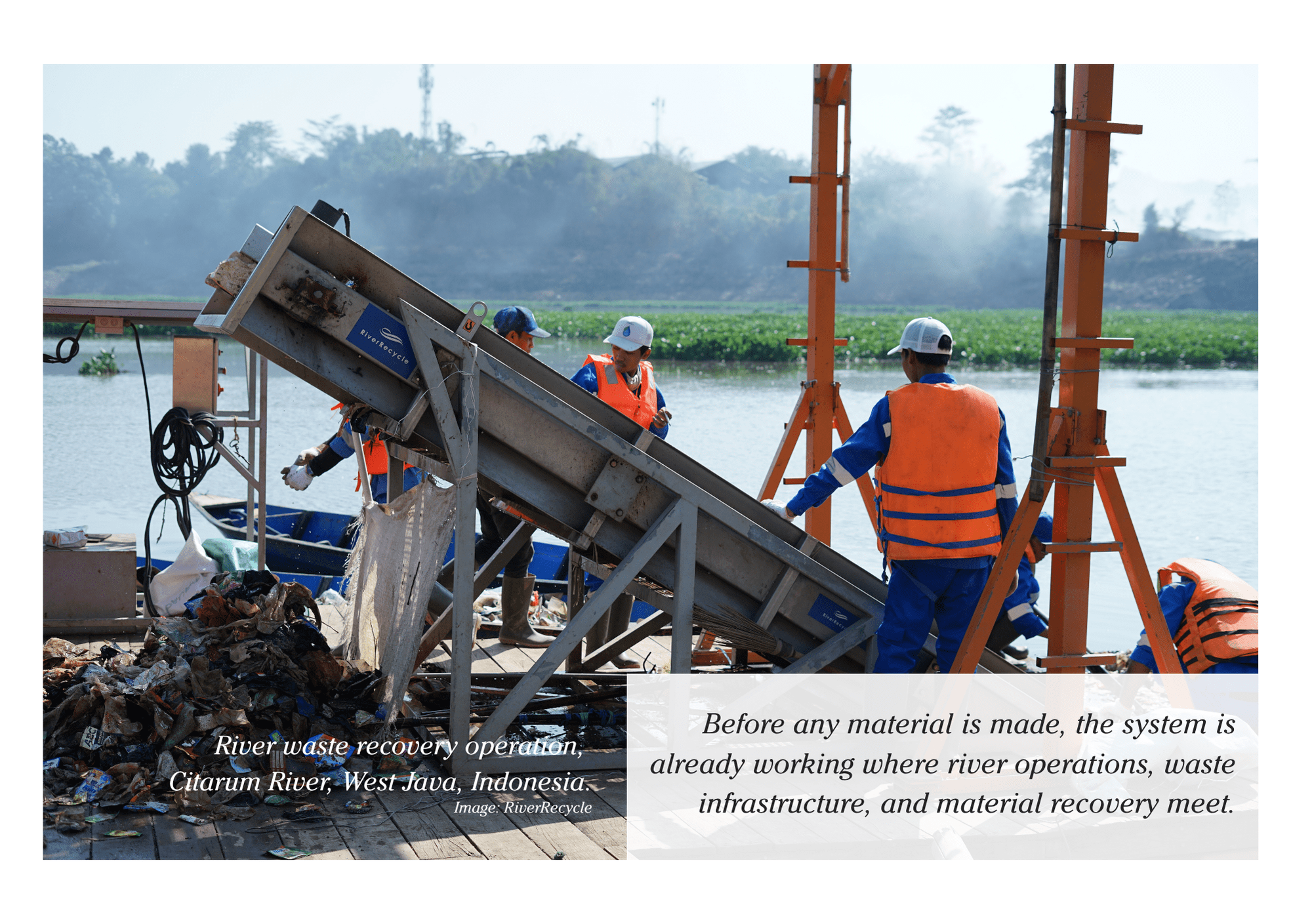
In much of Asia, river plastic is not just an environmental failure. It is also a systems failure—of collection, drainage, municipal reach, and market value.

That is what makes the model more interesting than a conventional river-cleaning story. The visible act is interception: floating waste is concentrated, extracted, sorted, and kept from moving downstream. But the more important proposition sits underneath. What is being built is a local recovery system inside places where rivers have already become the receiving end of weak waste infrastructure. RiverRecycle’s own model makes that clear. It begins not with recycling, but with feasibility work: river morphology, seasonal variation, stakeholder engagement, process design, market studies, and budgeting before project execution even begins.

That is also where the built environment relationship begins. It does not start only when a board appears in a retail fit-out or temporary structure. It starts earlier, in the attempt to organise waste recovery inside a physical setting shaped by flow, vegetation, access, labour, and local operational constraints. Before any material is made, the system is already working in the space where river operations, waste infrastructure, and material recovery meet.

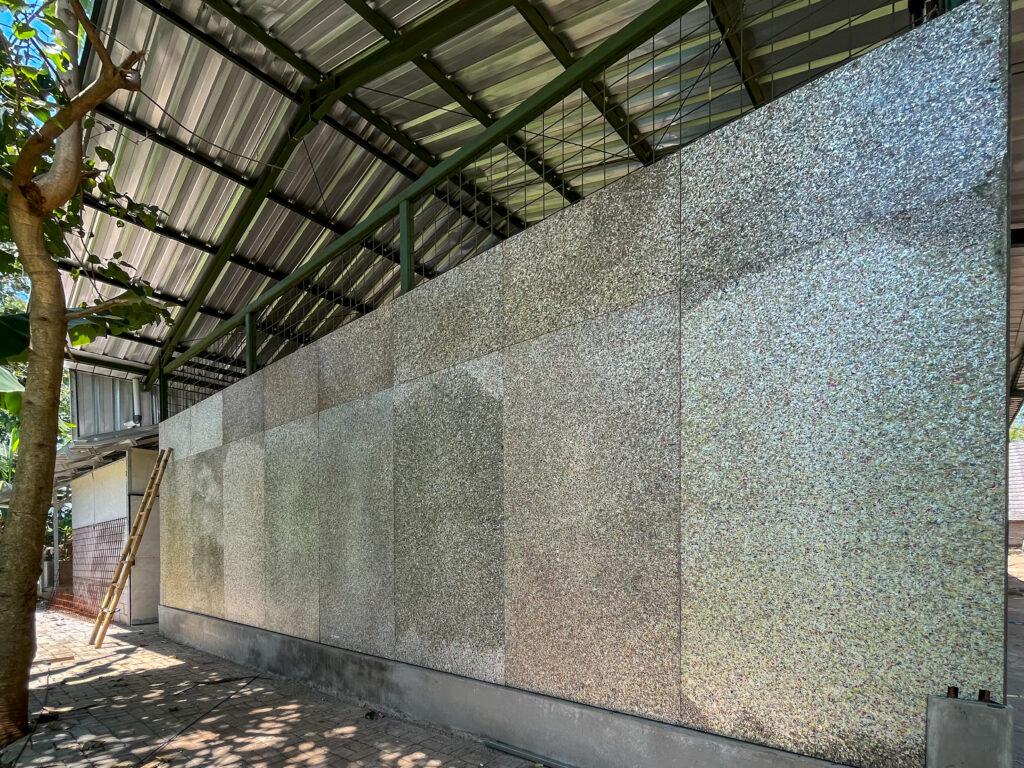
RiverRecycle boards used as wall cladding at its production facility in Bandung, West Java, Indonesia. Image: RiverRecycle

The second link comes later, when recovered low-value plastic re-enters the market as product. That is the bridge that makes the story more useful for Future Atlas. The real question is not simply whether waste can be removed from rivers. It is whether recovery can become operating logic—and whether that logic can eventually connect to fit-out, utility, temporary, and construction-adjacent uses that matter to the built environment. RiverRecycle positions the boards for walls and partitions, roofing and flooring, shelving and storage, worker housing, site offices, utility covers, acoustic barriers, and outdoor projects.

This is an excerpt of the article published in Future Atlas 2Q 2026 digital edition. Read the full story there. 

RiverRecycle by the numbers:

  • Founded: Helsinki, 2019.
  • Present in 8 countries: the Philippines, India, Indonesia, Ghana, Finland, Singapore, Vietnam, and Nepal.
  • Actively operating in 4 countries: the Philippines, India, Indonesia, and Ghana.
  • Current company figure: more than 6 million kg removed from waterways by January 2026.
  • Model: feasibility study, project phase, and recycling.
  • Core downstream product: RiverRecycle Boards, launched in early 2025.
  • Positioning: impact-led commercial business.

Work With Us

Contact Form