-
Project; Architecture;
Urban Design
Can a Small Private Building Become a Better Urban Neighbour?
At Naka-Ikebukuro Park, KEY OPERATION’s Clerestory Garden tests a modest urban proposition: how a privately owned shop-and-residence building can respond to a hard-working public plaza through frontage, planting, light and tenant activity. The Future Atlas asked architect Akira Koyama how the project approached that edge.
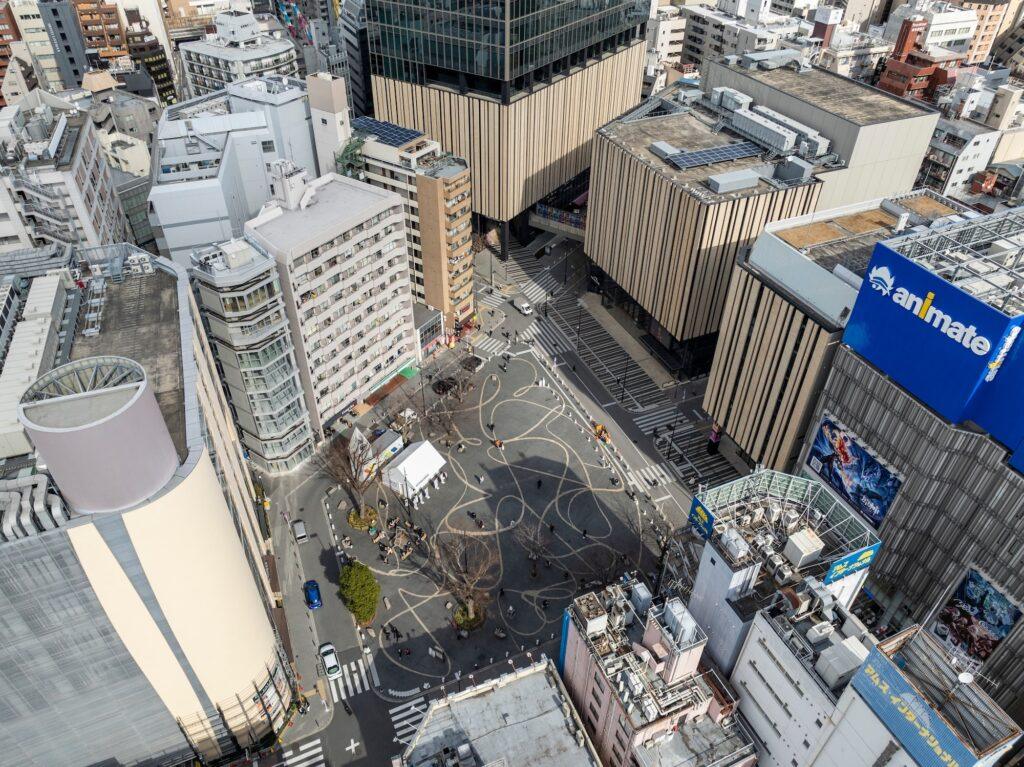
When Naka-Ikebukuro Park was transformed from a sandy surface into a stone-paved plaza, it took on a different civic role: less a conventional planted park than an open urban square supporting cultural events and public activity. For Clerestory Garden, a compact mixed-use building facing the plaza, this condition became central to the façade design.
The question that makes the project interesting for The Future Atlas is not whether a small private building can become public space. It cannot, at least not in any straightforward sense. The more useful question is narrower: how can a privately owned mixed-use building become a better urban neighbour to the public square beside it?
At ground level, the answer begins with use. Clerestory Garden’s ground-floor tenant is a popular donut shop, with a shopfront that opens towards the street and plaza through large glazed sliding doors. Queues form along the pavement outside, giving the building a visible public-facing life and adding everyday activity to the edge of the square.
But the building’s response to the plaza was not part of a coordinated district plan. According to Koyama, there was no formal coordination with the park authority or the wider Hareza Ikebukuro development regarding the façade. The decision to respond to the plaza was the architect’s own initiative.
“The site sits adjacent to a public space that was re-landscaped in stone around 2019 when Hareza Ikebukuro opened,” Koyama told The Future Atlas. “Looking at the hard, largely mineral façades of the surrounding buildings, we felt there was an unmet need for a building that gave something green back to the plaza, even though this was not required or incentivised. That choice was made freely.”
Koyama describes the building’s relationship with the plaza as something experienced at several distances. At street level, planting at the base of the building is visible to pedestrians. From the middle of the plaza, he says, the clerestory gardens read as a green band moving up the façade. From further away, the building’s silhouette carries the planting across the upper floors.
Green presence through the clerestory garden
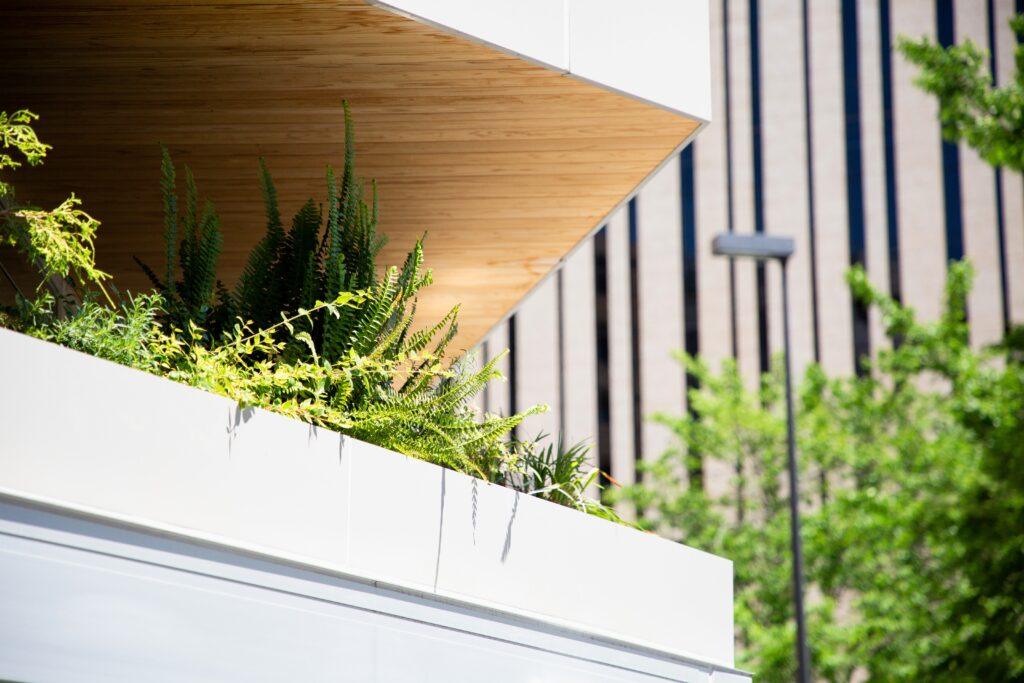
The planting strategy began with a practical constraint. Fire-rated aluminium sash units could not be fabricated beyond approximately 2.2 metres in height, creating a clerestory zone above the shopfront glazing on each floor. Rather than leaving this as a residual band, the design team set the clerestory back from the façade plane and inserted three-dimensional planting into it.
A conventional green wall was considered and rejected because it would have obscured the shopfronts and reduced lettable area. The clerestory garden became the compromise: a way to introduce greenery into the urban frontage without undermining the commercial viability of the building.
“The planting has grown considerably since completion and is noticeably more present than at handover,” Koyama said. “We expect it to continue maturing, managed through periodic pruning to maintain an appropriate volume. The intention is not a static façade but one that changes with the seasons and over the years, responding to the rhythm of the plaza trees.”
The planting is managed directly by the owner as part of the building’s overall maintenance. Safety anchor points were installed at each level, and the external staircase provides access to each clerestory garden. In that sense, the greenery is not treated as surface decoration, but as a building element requiring regular care.
“The warm timber soffits visible from below, the planting that changes with the seasons, and the light that filters through the greenery into the plaza at night—these are the ways in which the building tries to be a considered neighbour to the park, rather than simply occupying the site.”
Akira Koyama
Project information
Project name: Clerestory Garden at Naka-Ikebukuro Park
Location: Toshima-ku, Tokyo
Completion: January 2025
Principal use: Shop + Residence
Structure: Steel-frame construction
Site area: 82.84 m²
Building area: 65.47 m²
Total floor area: 469.06 m²
Contractor: Watanabe Construction Co., Ltd.
Structural engineer: Delta Structural Consultants
Facilities: Comodo Facilities Planning
Architects: KEY OPERATION INC. / ARCHITECTS
Editorial note: This story is based on project information provided by KEY OPERATION INC. / ARCHITECTS and written responses from architect Akira Koyama to The Future Atlas.