- Future Atlas Digital; Land; Development
Can Regenerative Collectives Offer a Different Way to Live with Land in India?
This contributed essay asks whether regenerative collectives can reconnect living, food, water, livelihoods and ecological repair under intensifying urban and resource pressures.
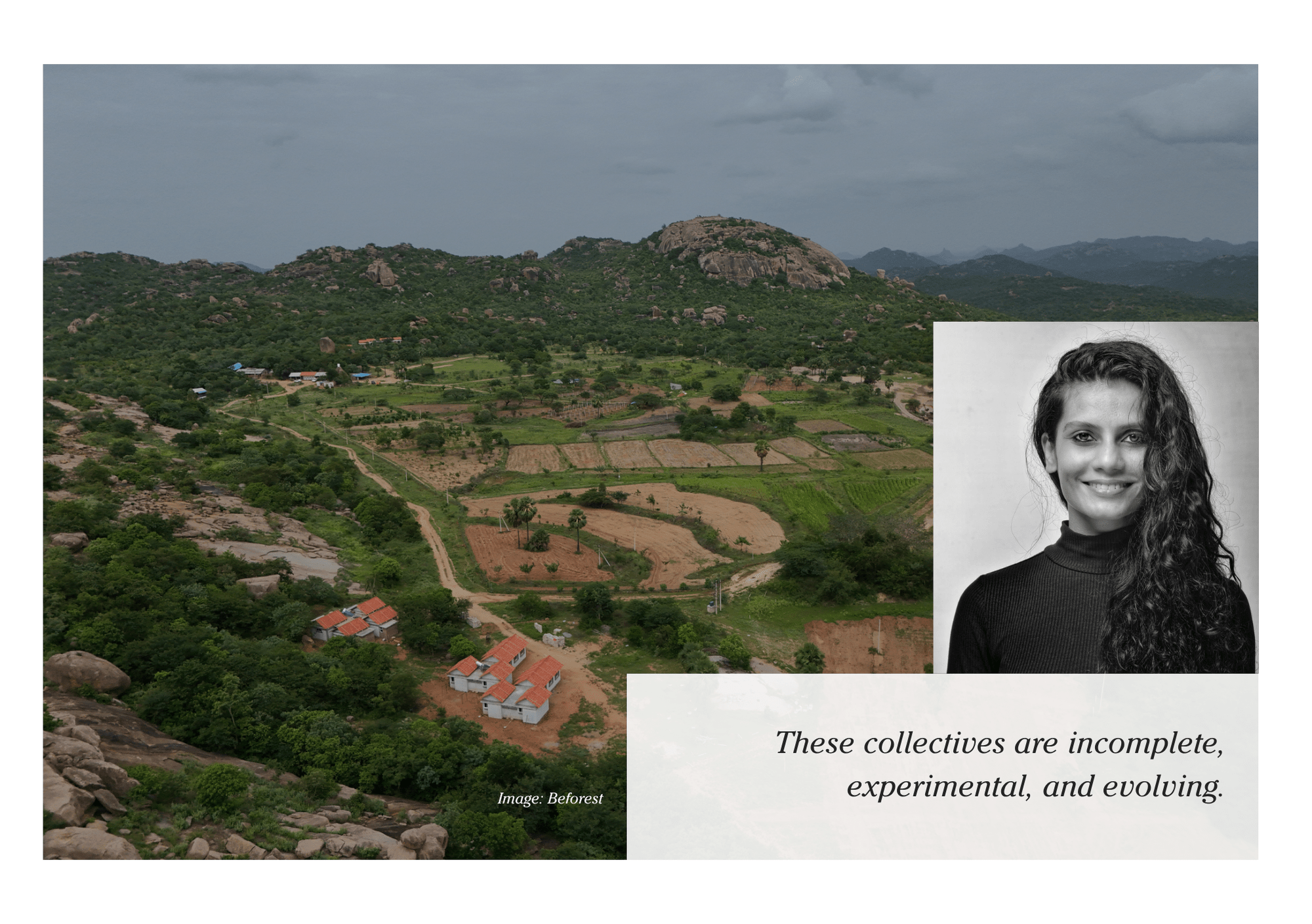
- Tushita Varma
Land regeneration is often spoken about as an ecological solution, but it is best understood as a systemic response to overshoot. Nearly 40% of the world’s land and one-third of India’s land are degraded because human pressures have exceeded the land’s ability to regenerate. Human activity has altered 75% of terrestrial ecosystems. Land can self-heal if extractive pressures are removed. Permaculture understood this long ago: least change for the greatest possible effect. Since more than half of the world’s GDP depends on nature, what does not easily recover are the economic and social systems organised around extraction. Furthermore, regeneration projects depend on institutional funding, policy support, and community effort, whereas the dominant development model scales in the opposite direction.
By 2036, India’s urban population is expected to reach around 600 million. Nearly 70% of the urban infrastructure India will need by 2047 has yet to be built. Food demand is projected to increase by roughly 21% by 2050, requiring average production growth of 4% every five years. Meanwhile, 50% of the agricultural households are in debt. In real estate, land is increasingly viewed as speculative inventory instead of social infrastructure. Major cities continue to hold about 1 million unsold housing units, with inventory values reaching roughly 5% of India’s GDP. The mainstream psyche measures prosperity through the accumulation of resources and wealth. Growth, defined and driven by increased consumption, needs to be reconceptualised through regenerative living. Commonland recognised this contradiction in its 4 Returns framework, which argues that regeneration can endure when natural, financial, social, and inspirational returns are produced together.
Two Collectives, Two Tests
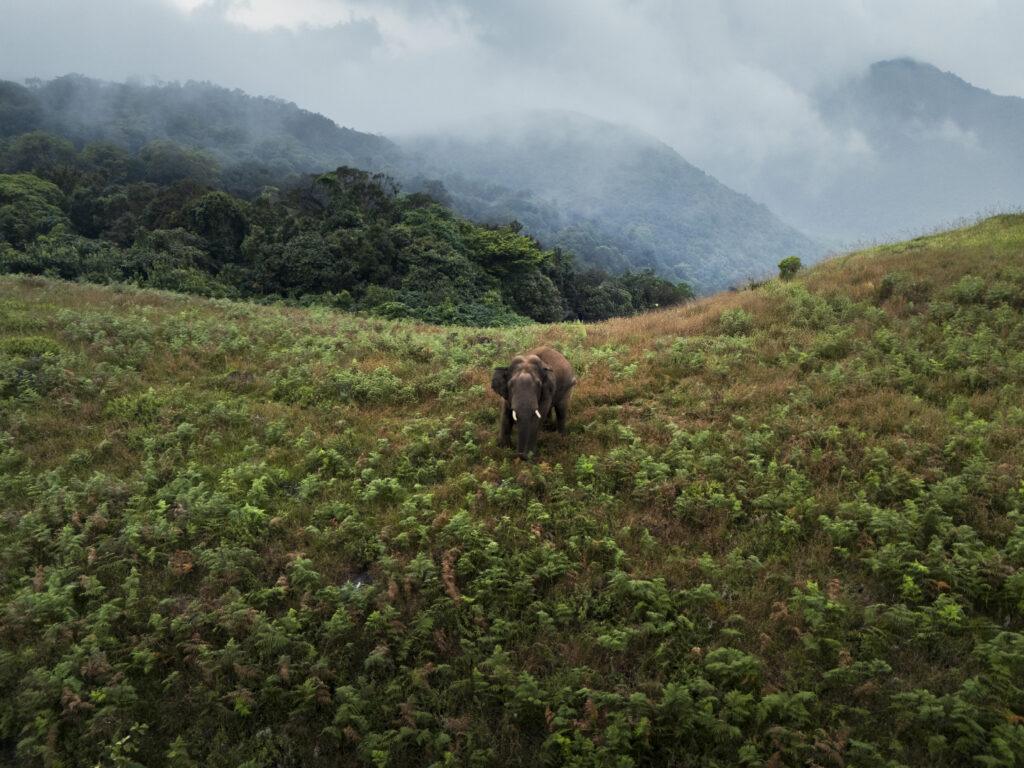
Two collectives in India are implementing the 4 Returns framework within the logic and aspirations of mainstream life. They operate in very different landscapes. One is a farming collective on degraded land near the city of Hyderabad. The other, Poomaale Collective, is a wilderness collective located near a biodiversity hotspot, exploring how land can provide inspirational, social, and financial returns while keeping the ecologically sensitive zone intact. To integrate these collectives into mainstream living, they must provide food, water, shelter, and energy while meeting all four returns.
Both collectives are crowdfunded and currently operate without reliance on external funding agencies. Early support comes from evangelist investors, a seed community and Beforest, a private limited company, through which members collectively subscribe to around 25% of the planned acreage at preferential entry pricing. This early participation provides the initial financial base needed to begin work while also distributing risk among a group of committed participants, allowing a shared space for experimentation, learning, and iterative development.
This is an excerpt of Tushita Varma’s contributed essay published in Future Atlas 2Q 2026 digital edition. Read the full story there.
Tushita is an architect and strategic communications specialist with over a decade of experience working across diverse climate themes. Her work spans clean energy, social design, local research for climate resilience, community-led architecture, and citizen-led planning across Asia, Europe, North America, Africa, and the Pacific. She now leads content and storytelling for Beforest.