Seven projects across Asia show how climate, people, terrain, industry and cultural memory shape the design response.
Yun Wai Wing
Working across Asia has taught us to begin each project with a simple question: what is shaping this place?
Context reaches beyond the physical frame of terrain, roads, neighbouring buildings, movement and access.
Climate, demographics, economic activity and cultural habits also influence how a place is used, where value can be created and whether an intervention will remain useful as the city changes.
At Connect-X 2026, I used seven projects to show how this thinking operates at different scales. The response changed with each place; the discipline of reading the place came first.
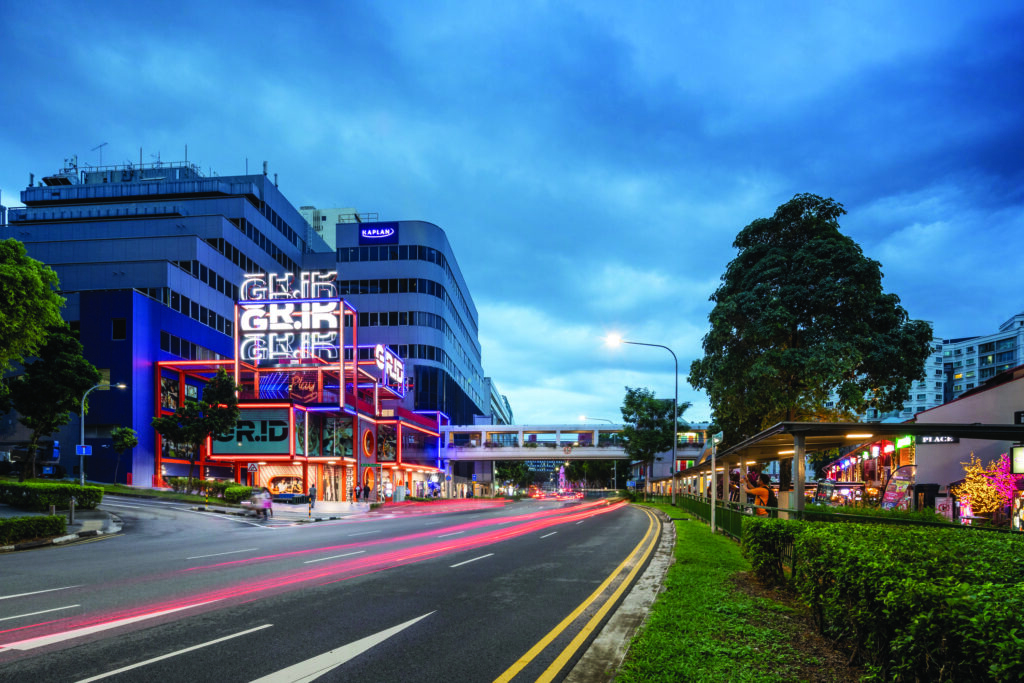
GR.iD, Singapore. Image: Fabian Ong.
Demographics: Designing For A Changing Precinct
GR.iD began with the former POMO mall in Selegie, an area increasingly shaped by students, arts institutions and youth culture. Despite its location, the building’s enclosed corner and empty atrium offered little connection to the life around it.
Working within a tight budget and programme, SPARK opened the corner towards Selegie Road and replaced the atrium with a stack of colourful, programme-filled boxes.
Retail spaces gained a stronger street presence, while new stairs, terraces and gathering areas gave the mall a more social character. The intervention drew its identity and organisation from the demographic shift already taking place around the site.
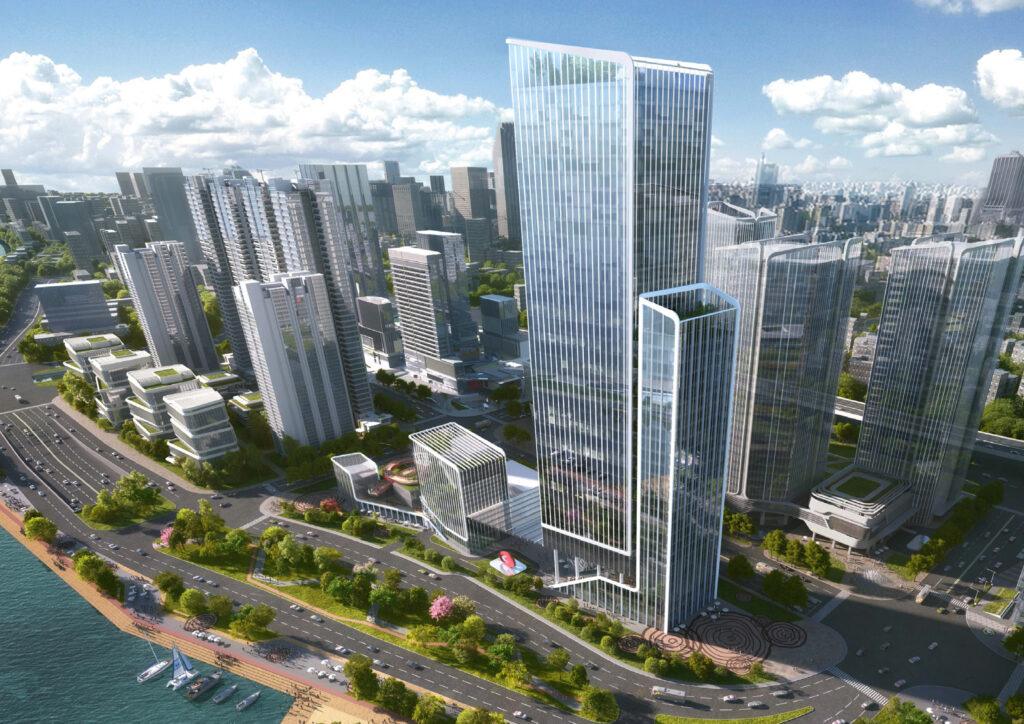
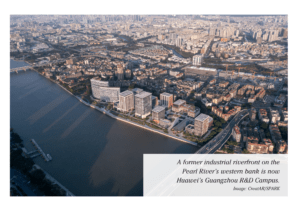
In Guangzhou, a spiral ramp carried pedestrians above a highway and recovered views towards the Pearl River. Image: SPARK.
Topography: Letting The Land Set The Logic
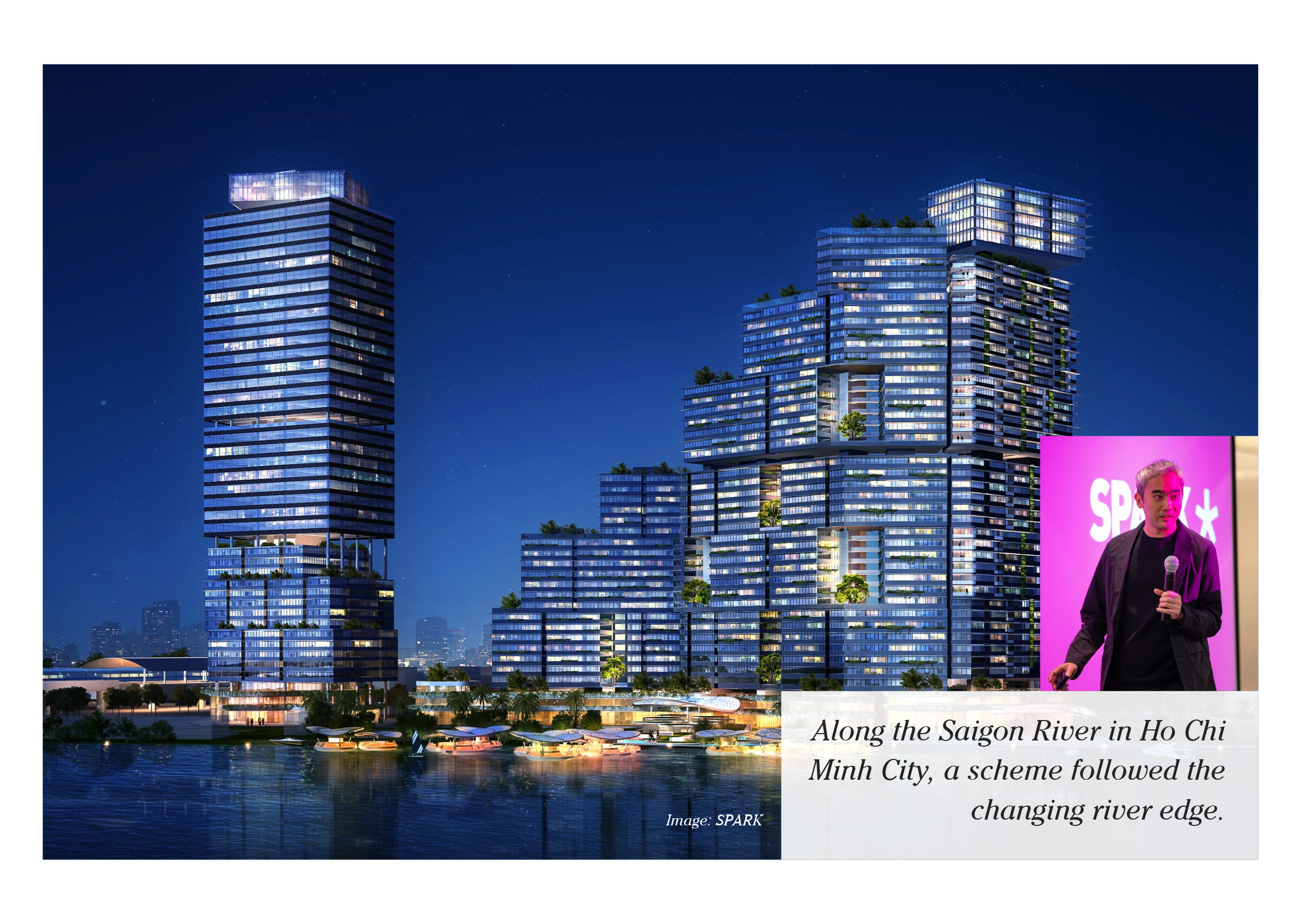
At the scale of a master plan, landform and infrastructure can organise the entire response. Three mixed-use projects show how differently this can play out. In Chittagong, Bangladesh, development was formed around a hill. Along the Saigon River in Ho Chi Minh City, a second scheme followed the changing river edge. In Guangzhou, a spiral ramp carried pedestrians above a highway and recovered views towards the Pearl River.
Each project began by working with the condition that might otherwise have been treated as an obstacle. The hill, river and highway became devices for arranging movement, massing, views and public space.
This is an excerpt of Wing’s article (adapted from his presentation at Connect-X 2026 ) published in Future Atlas 3Q 2026 digital edition. Read the full story there.
Wing is a Director at SPARK Architects, leading large- scale, award-winning projects across Asia. His portfolio spans master planning, architecture, and landscape design. Wing directs the design and project management of major developments, including the 40-hectare Suzhou International Industrial Design Village, the 230,000-sqm Taizhou Fish Market, and a 200,000-sqm luxury residential development in Vietnam. His work has gained widespread international recognition, receiving accolades at the World Architecture Festival and the Singapore Institute of Planners Awards, among others. Prior to joining SPARK Singapore in 2013, Wing worked at MVRDV in Rotterdam. He holds an MSc in Architecture from TU Delf—funded by the Sir Edward Youde Memorial Fellowship alongside a BSSc in Architectural Studies (First Class Honours) and a BSSc in Sociology from The Chinese University of Hong Kong.