Dr Wynn Cam shares practitioner insights on how rising infrastructure demands—across digital systems, energy, and materials—are reshaping project decisions and urban development across Asia.
In your view, how are rising infrastructure demands (e.g. digital infrastructure, energy systems) changing how architects and urban designers approach site strategy and building typologies in dense Asian cities?
In dense Asian cities, where land scarcity and high costs define development, digital and energy infrastructure can no longer be treated as back-of-house utilities. We are moving toward a model of urban assemblage, where these systems are integrated into the core of urban form.
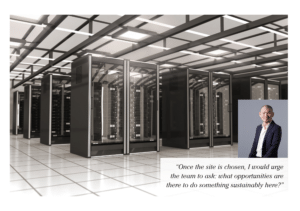
While digital infrastructure should not dictate design outright, the growing demand for low-latency data—driven by AI, autonomous systems, and real-time financial networks—is pulling these facilities out of isolated industrial zones and closer to the communities they serve. This shift creates new opportunities for mixed-use development, where digital, energy, and even water infrastructure are co-located within the urban fabric.
We are also seeing the emergence of more sophisticated urban hybrids. High-voltage substations are being embedded within commercial towers, while infrastructure such as desalination plants is being integrated beneath public parks. By designing around principles of land productivity and circularity, these systems can generate additional value—for example, capturing waste heat from data centres to support district cooling or adjacent uses.
This fundamentally repositions infrastructure—from ‘invisible utility’ to high-value, multi-functional urban asset that maximises every square metre of city land.
Are there any emerging design strategies or technologies you’re particularly excited about that could reshape how infrastructure is designed in the region?
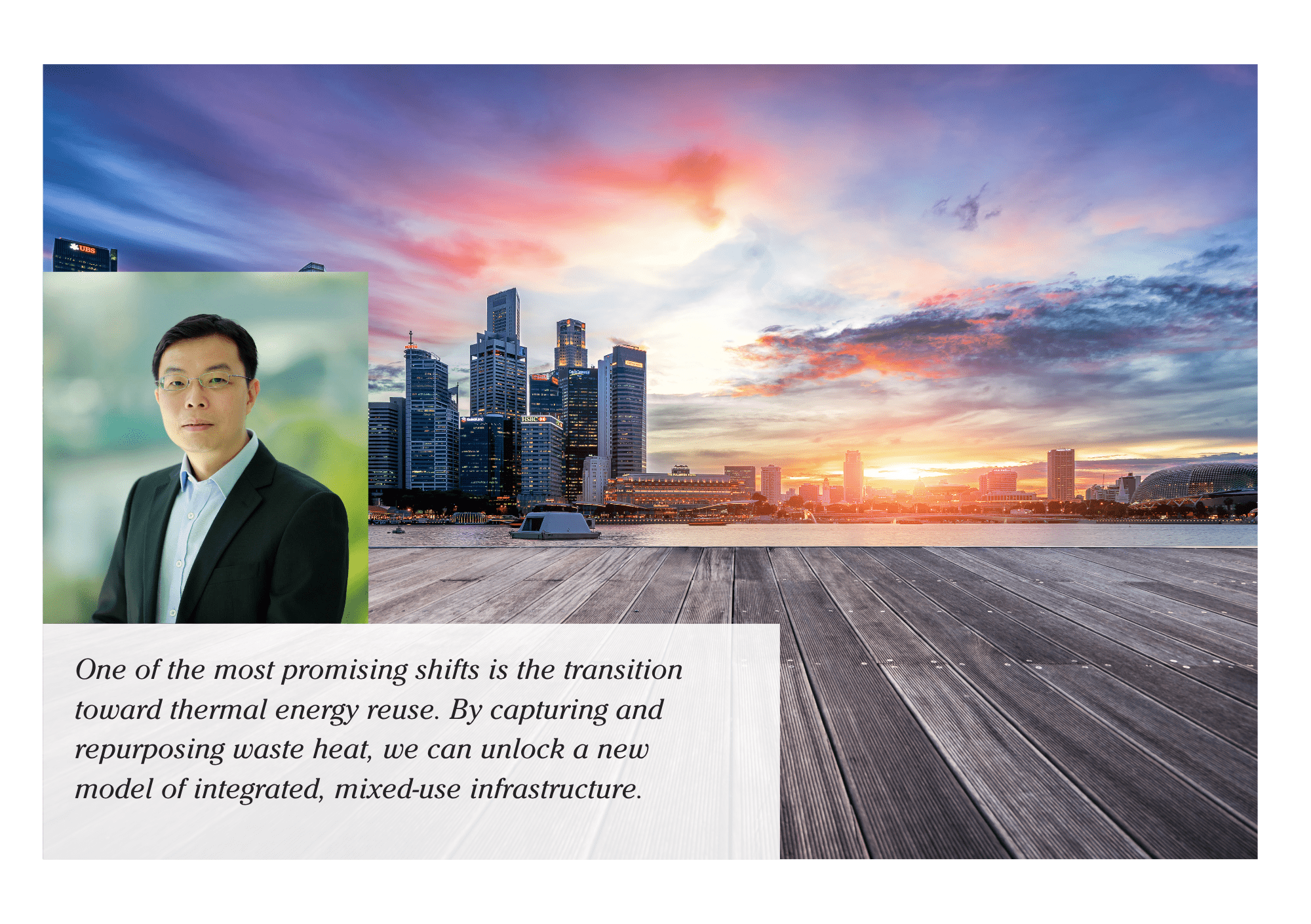
One of the most promising shifts is the transition toward thermal energy reuse.
By capturing and repurposing waste heat, we can unlock a new model of integrated, mixed-use infrastructure. Data centres, for example, can be paired with adjacent programmes—such as wellness facilities or thermal environments—where excess heat becomes a functional input rather than wasted output.
This changes how we think about infrastructure. What was once considered a “grey” utility can evolve into a productive urban system, supporting both commercial activity and community use.
More broadly, this approach supports a regenerative model of development—one that not only reduces carbon impact, but also creates tangible local value. In dense Asian cities, where land and resources are constrained, this ability to extract multiple layers of performance from a single asset will be critical.
This is an excerpt of Dr Wynn Cam’s interview published in Future Atlas 1Q 2026 digital edition. Read the full story there.
With 20 years of practice in Sydney and Singapore, Dr Cam has established himself as a seasoned professional in the field of sustainable architecture and urban design. His expertise encompasses a diverse array of project types and scales—from city planning and township development to innovation districts, university campuses, mixed-use complexes, housing precincts, data centres and adaptive re-use design. Among his notable projects are ESSEC Business School, Jurong Innovation District Master Plan, Saigon Sports City, High-rise Green Data Centre, and multi-storey Floating Data Centre in Singapore.