A Sales Office Built Around Sourcing, Assembly and Reuse

In Hoskote, Bengaluru, Elements of Nature by Source Architecture serves as a sales and marketing office for a larger township development. The additional technical material shared with The Future Atlas places the project in a different light: a lightweight commercial prototype assembled in layers, partly reusable, and defined by a clearer material logic.

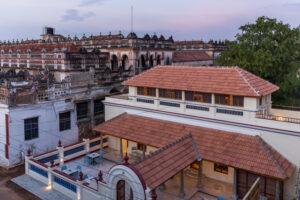
Elements of Nature, a sales and marketing office for a larger township development in Hoskote, Bengaluru. Image by Shamanth Patil

One of the more telling images shared with 未来地图集 is the sourcing map. It places bamboo, PUF panels, timber, aluminium sections, glazing, nursery stock and parts of the furniture package within a local-to-regional network around Hoskote. That does not resolve the environmental question on its own. It does, however, shift attention from image to system.

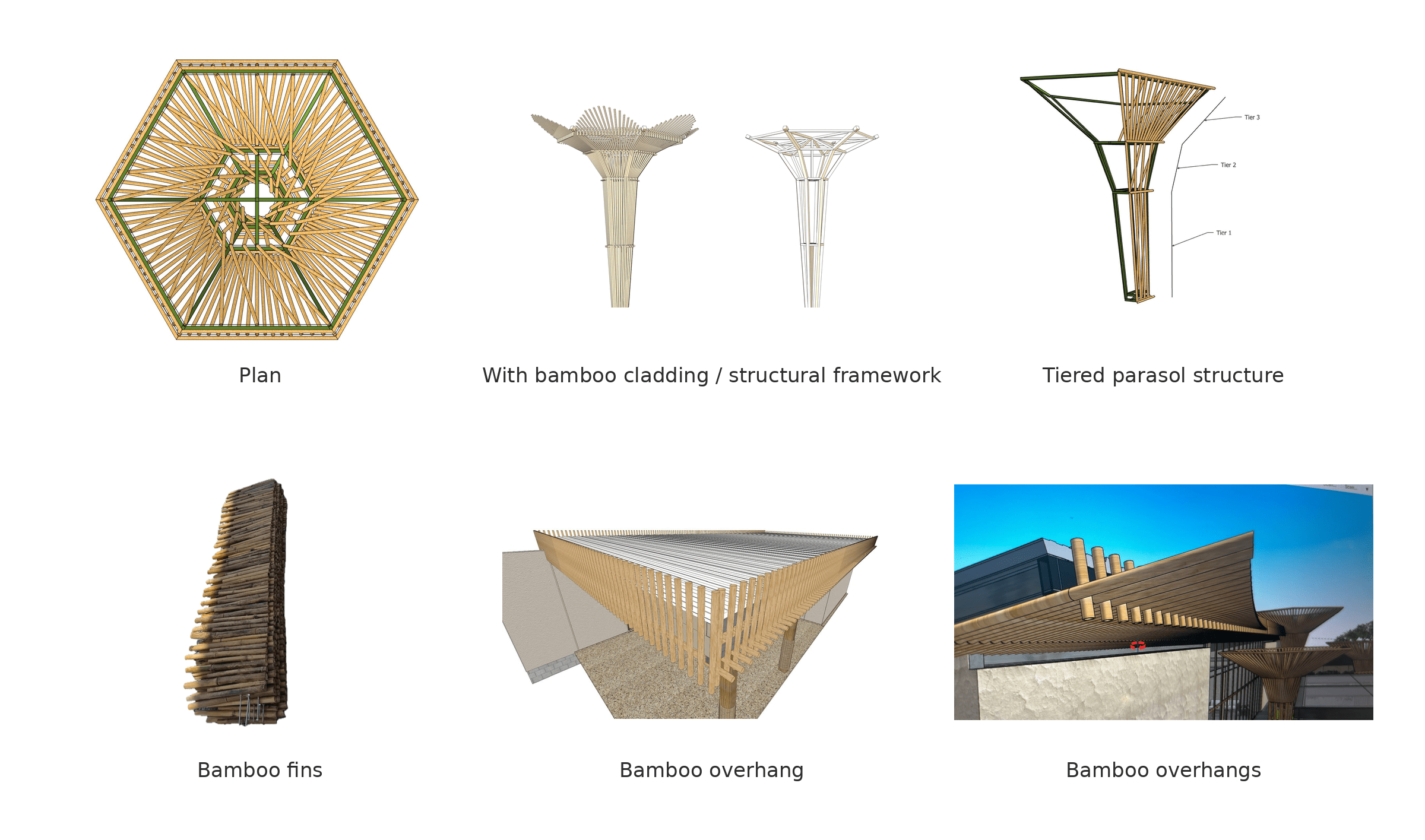
Elements of Nature serves a 120-acre township development as its sales and marketing office, and the stronger point of interest lies in how it has been assembled. At its core is a steel skeleton that carries the primary structural load and allows for future disassembly, relocation and reuse. Within that frame sit glass and insulated PUF panel assemblies used as technical layers in enclosed spaces, while bamboo appears as a secondary system in the ceiling, fins, shading devices and parasol structures. The result is less a pure natural-material building than a hybrid one: light, layered and partly recoverable.

The project’s supplied sourcing map places many key materials and components within a local-to-regional radius around the site. Image by in-house team at Source Architecture

That hybrid character is also what makes the project more legible. The material story is uneven, but it is specific. In response to follow-up questions from 未来地图集, the project team identified components with higher reuse potential, including the steel frame, bamboo parasol structures, doors, glazing systems, furniture and the yurt structure. Doors and windows follow modular dimensions intended to support standardised assembly, transport and reinstallation, while prefabricated timber fins on the façade sit within that more recoverable logic as well. Other parts of the project are more fixed to site. Rammed-earth elements, micro-cement finishes, landscape work and similar interventions would need to be remade rather than simply moved. That distinction helps make the environmental argument more precise.

The building is organised around a steel structural frame, with glass and insulated PUF panel assemblies as technical layers and bamboo used as a secondary shading and ceiling system. Image by Shamanth Patil
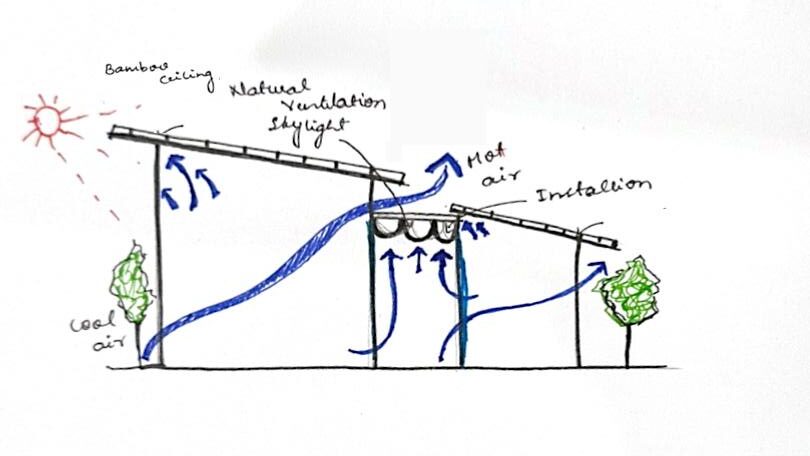
Filtered daylight, cross ventilation and open circulation support passive comfort strategies, while enclosed rooms continue to rely on mechanical cooling. Image by in-house team at Source Architecture

The same applies to comfort. The follow-up material does not present the project as a fully passive office, and that is useful. Cross ventilation, open-plan circulation, bamboo shading, filtered daylight and thermal buffering are part of the design approach, particularly across semi-open and outdoor areas. But enclosed spaces such as the AV room, meeting rooms and presentation area still rely on mechanical cooling, with the project material acknowledging that year-round operation without air-conditioning would be difficult. What emerges is not a passive office in any absolute sense, but a building that uses passive means where it can and mechanical systems where it must.

Seen through that fuller set of inputs, Elements of Nature becomes more interesting. It shows how a building tied to a phased township rollout can be made lighter in structure, clearer in assembly, and less final in how it occupies the ground. That does not make it a complete environmental model, nor does it need to be presented as one. What the project does offer is a more concrete view of how sourcing, component life and after-use can enter the discussion around a building type that is often treated only as a polished front end to a larger township development still being built.

Reuse potential is concentrated in removable systems including the steel frame, parasol structures, glazing, doors and selected prefabricated facade elements. Image by in-house team at Source Architecture

Project Information
Project: Elements of Nature
Location: Hoskote, Bengaluru, India
Typology: Sales and marketing office
Area: 8,000 square feet
Associated development: 120-acre township development
Design: Source Architecture
Principal architects: Sneha Ostawal and Manu Gautham
Photography: Shamanth Patil Photography

Editorial note: This story is based on project information provided by Source Architecture and written responses to follow-up questions from The Future Atlas.

与我们合作

联系表格