The 50% Nobody Fully Counts

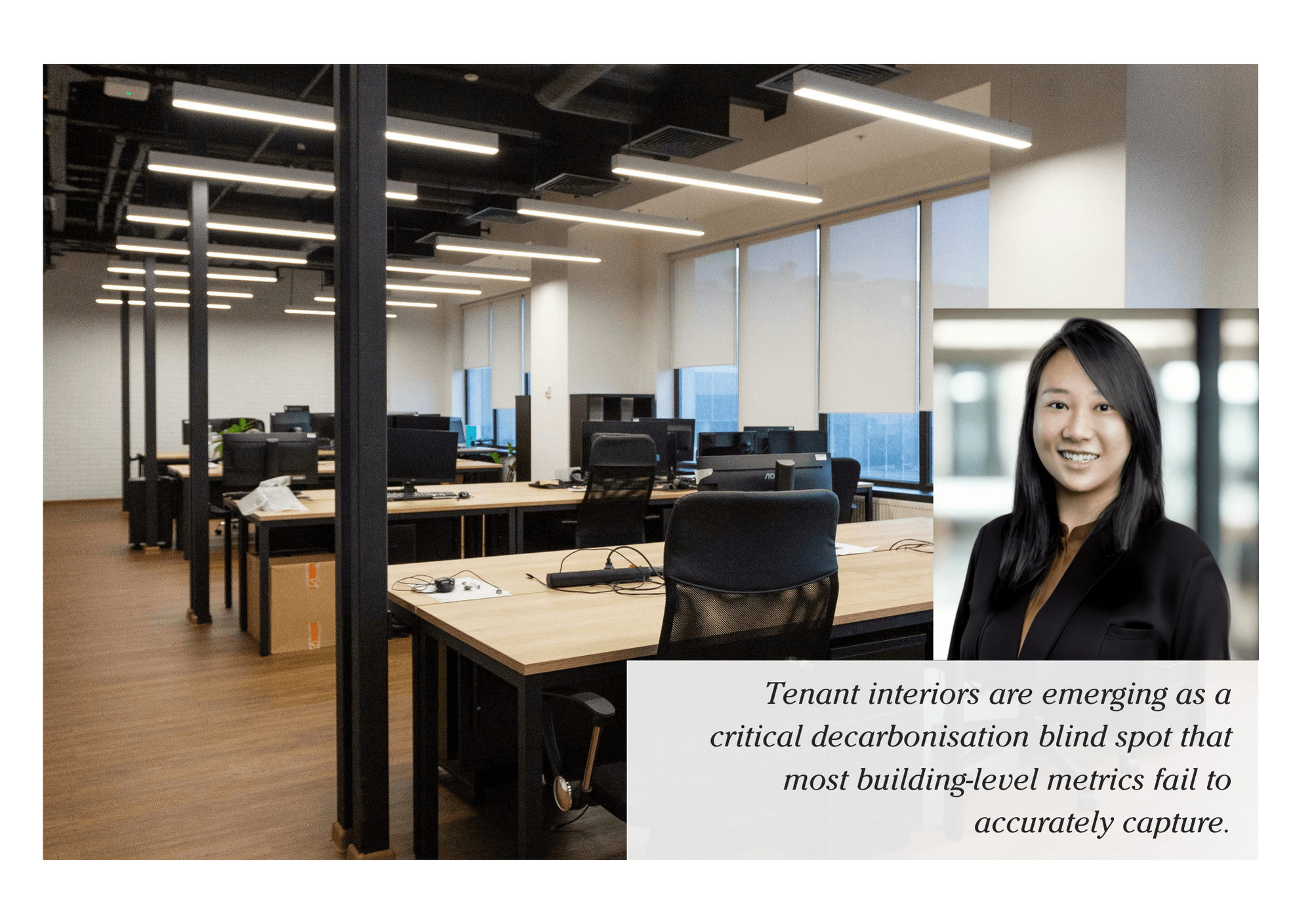
Singapore’s data shows tenant electricity use can account for about half of total building electricity consumption in office and retail developments. As electricity is a major driver of operational carbon—and recurring fit‑outs add significant embodied impacts—tenant interiors are emerging as a critical decarbonisation blind spot that most building‑level metrics fail to accurately capture.
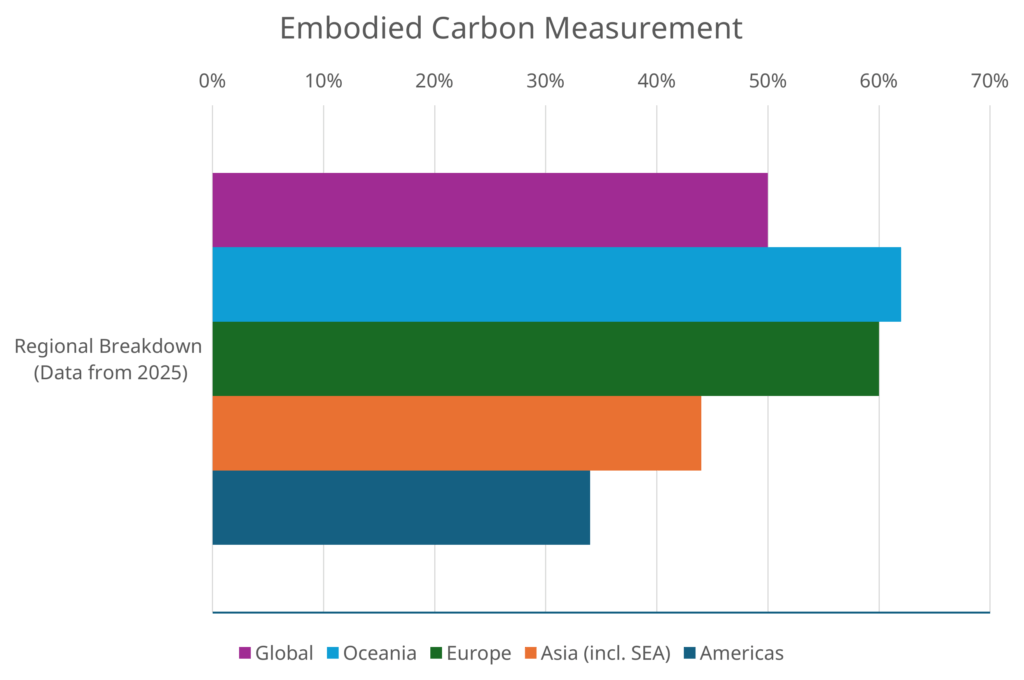
Over the past two decades, Southeast Asia’s green building movement has advanced, with rating tools shaping design standards, influencing investment, and mainstreaming sustainability. Frameworks now cover energy, water, waste, indoor environmental quality, embodied carbon, and well-being—and many have expanded to include tenant interiors. Yet accountability remains weak. By 2025, 50% of development participants globally reported measuring embodied carbon, but Asia, including Southeast Asia, remains behind Europe and Oceania in reported embodied carbon measurement (GRESB, 2025; Figure 1).

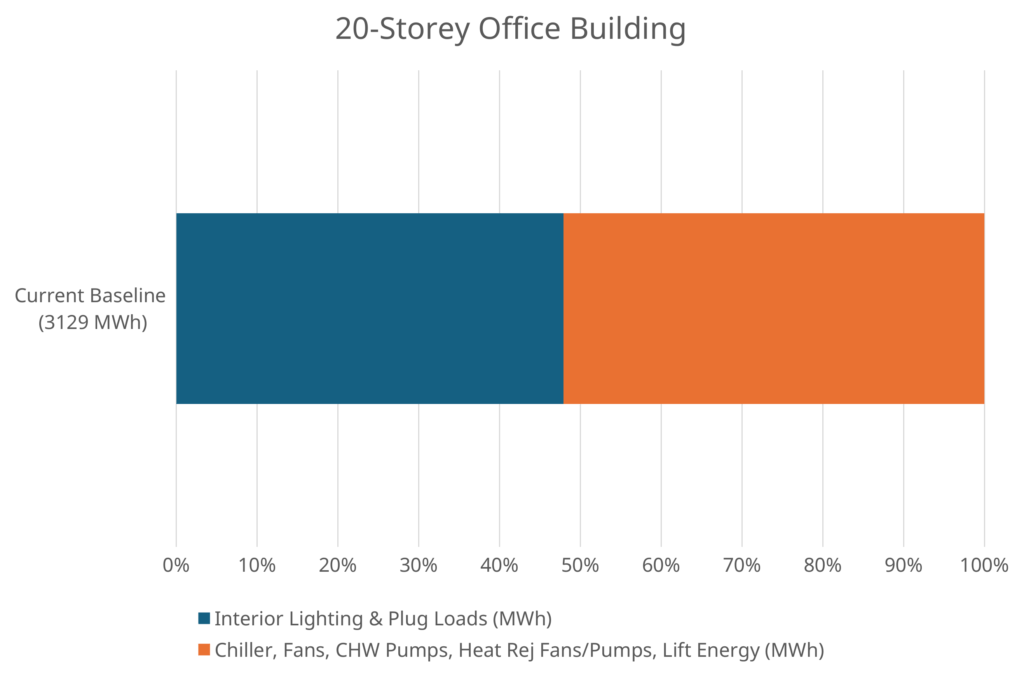
The scale of tenant emissions is clear. Singapore’s Super Low Energy Building Technology Roadmap cites data from the BCA Building Energy Benchmarking Report showing that tenant electricity use, including plug loads, accounts for about half of total building electricity consumption in office and retail buildings (BCA, 2018, p. 24; Figure 2). Regional studies find lighting contributes 12–20% (Hong & Rahmat, 2022; Saidur, 2009) while plug loads and equipment can add 15–24% (Kwong, 2014; Kwong et al., 2018; Tan et al., 2024). With Southeast Asia’s electricity demand projected to rise 4% annually to 2035 (IEA, 2024), the operational carbon implications are significant.

Beyond operations, embodied carbon from interiors compounds impact: As shown in RESET’s Embodied Carbon and Circularity for Office Interiors (2022), office interiors replaced every 2.5 years can generate over four times the construction carbon of core and shell, with tenant fit‑outs contributing 25–60% of whole‑life emissions (Urban Land Institute, 2024; Fitting Out Spaces for Net Zero, p. 4).

Figure 1: Regional breakdown of embodied carbon measurement and reporting (data extracted from 2025 GRESB Real Estate Assessment, GRESB 2025). From Lauren Ang.
Figure 2: Total electricity consumption breakdown for a 20-storey office building in MWh, recreated from the BCA Super Low Energy Building Technology Roadmap 2018. In the current baseline scenario, interior lighting and plug loads together account for approximately 1,500 MWh out of 3,129 MWh. The roadmap also cites BCA Building Energy Benchmarking Report data showing that tenant electricity consumption, including plug loads, accounts for about half of total building electricity consumption in office and retail buildings. From Lauren Ang.

Collectively, these findings highlight a critical gap: tenant interiors drive a substantial share of both operational and embodied carbon, yet they remain inconsistently tracked and governed. Closing this gap is Southeast Asia’s next frontier—deepening visibility into emissions from occupied spaces, fit‑out cycles, procurement choices, and user behaviour—if the region is to make meaningful progress toward net‑zero goals.

This is an excerpt of Lauren Ang’s contributed article published in Future Atlas 2Q 2026 digital edition. Read the full story there. 

Lauren Ang is Managing Partner and Principal ESD Consultant at Adapt D&B LLP, with 13 years of Asia‑Pacific experience advancing sustainable interiors and environmental performance. She holds a Master of Architectural Science from the University of Sydney and is a Singapore Green Mark Accredited Professional, Accredited Class 1 Interior Designer, and International Lighting Designer (DesignIALD, TechIESANZ).

与我们合作

联系表格