For Indonesia’s hospitality pipeline, landscape is no longer a finishing layer. Water, soil, heat, planting and maintenance are becoming asset-performance questions.
Indonesia’s hospitality market is not standing still. International arrivals reached 1.16 million in February 2026, up 13.37% year-on-year, according to Statistics Indonesia. At the same time, Middle East conflict is disrupting air travel through key transit hubs and pushing up aviation fuel costs. Indonesia has responded by placing more emphasis on Asia and Oceania markets. For hospitality owners and project teams, that makes long-term operating quality—not just opening-day image—more important.
In resort development, landscape has often been briefed as atmosphere. It frames the arrival. It softens the architecture. It creates shade, lushness, privacy and escape. In the sales deck, it helps the project feel complete. In the opening photographs, it gives the asset its resort character.
That role still matters. Hospitality landscape must still carry guest experience, brand value and visual quality. But across coastal, island and high-rainfall destinations, it now carries a heavier brief. It has to manage stormwater. It has to tolerate heat and unpredictable rainfall. It has to work with local soil. It has to reduce maintenance pressure rather than create a long-term upkeep burden. It has to support biodiversity without becoming a claim detached from site performance.
In other words, landscape is no longer only a soft amenity layer. It is part of how the asset functions.
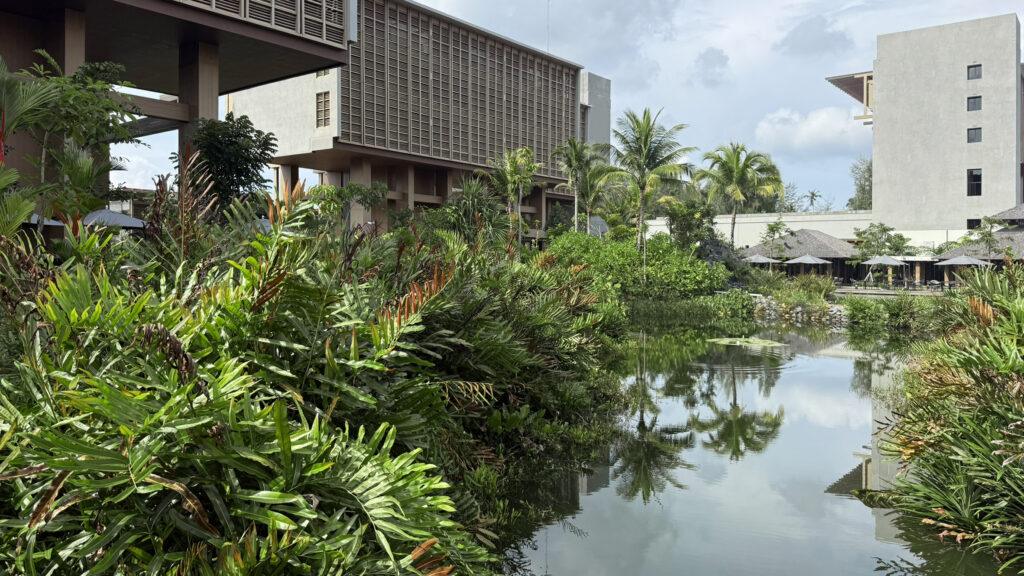
Integrated lagoon system at Hotel Indigo Bintan functions as rainwater collection and filtration,
managing stormwater runoff while supporting native wetland ecology within the resort landscape. Image: SIURA Studio
Practitioner’s view: Beyond visual amenity Interview excerpts have been edited for length and clarity.
This article draws on a Future Atlas conversation with Anton Siura, Founder, SIURA Studio, whose recent hospitality work in Bintan frames landscape not as decorative planting, but as part of a project’s water, maintenance and ecological infrastructure.
Future Atlas: What should hospitality and resort landscapes in Indonesia now be doing beyond visual amenity?
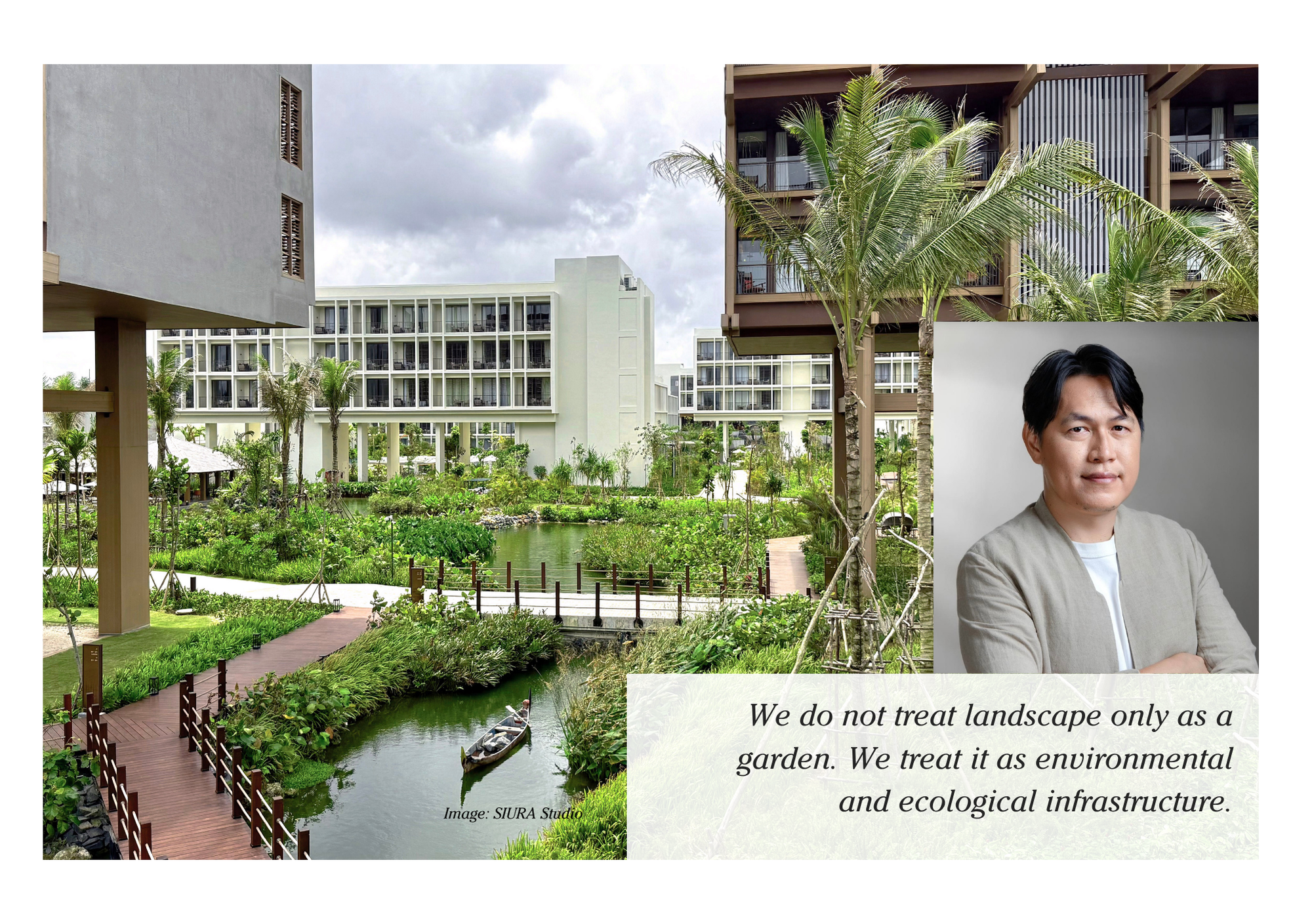
Anton Siura: Clients still want landscape to be beautiful, but more of them are also asking about sustainability and water management. We do not treat landscape only as a garden. We treat it as environmental and ecological infrastructure. It should perform—including making maintenance easier, managing rainwater, supporting planting, and improving biodiversity within the resort.
Anton Siura is a landscape architect and Principal of SIURA Studio, an award-winning landscape architecture and urban design practice based in Singapore. With over two decades of experience, he has led transformative projects across Asia, including urban parks, waterfronts, hospitality destinations, and mixed-use developments. Anton is passionate about creating resilient, regenerative, and people-centred environments that address challenges such as climate change, biodiversity loss, and urban liveability. Recognised for his expertise in nature-based solutions and sustainable stormwater management, he advocates for design that goes beyond aesthetics, strengthening the connection between people, place, and nature while delivering lasting environmental, social, and economic value.