- USRF™ Applications Series: February 2026
First 3-City Scenarios
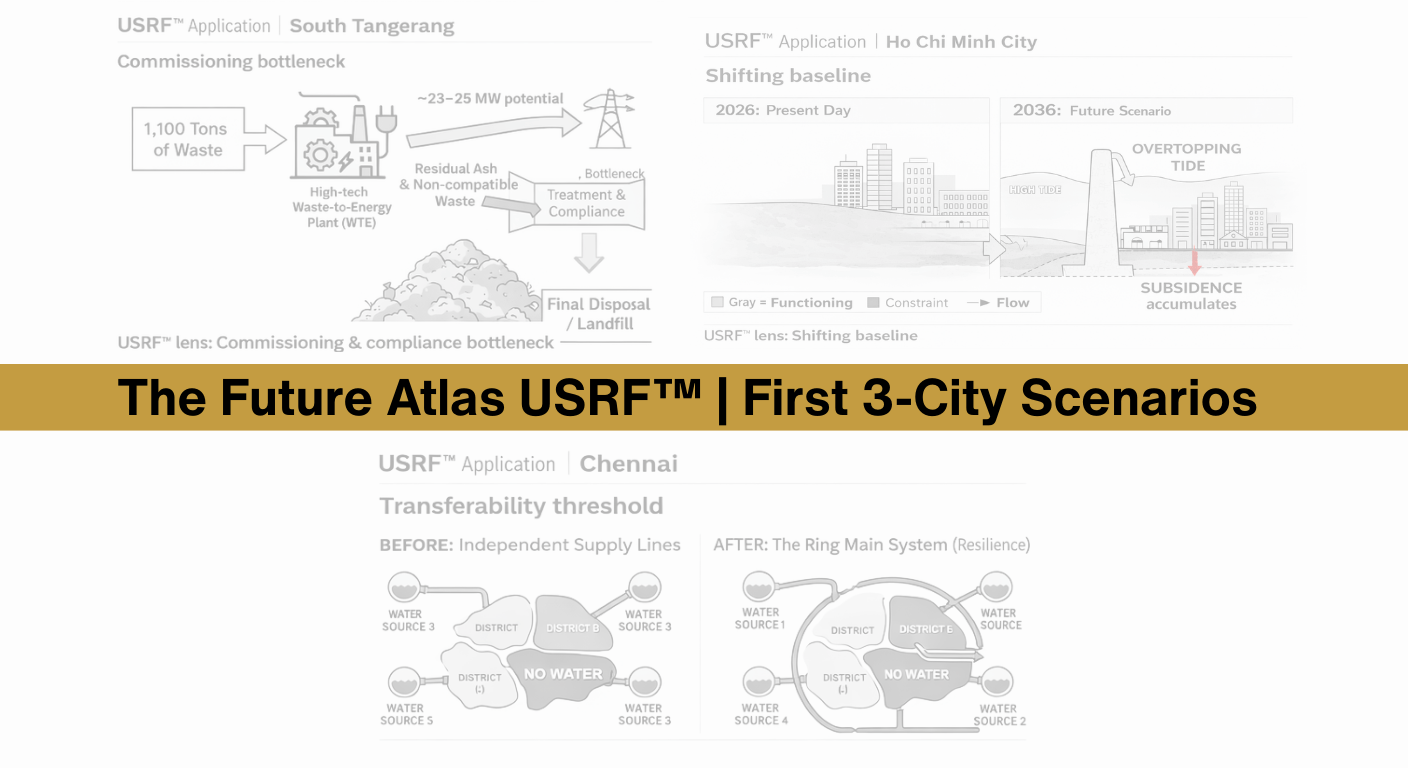
3 Cities, 3 Likely Outcomes: Where the bottleneck shows up first.
- Candice Lim
In fast-growing cities, the headline issue is rarely where the binding constraint shows up first. What looks like a waste project can become an operations-and-compliance bottleneck. What looks like flood protection can become a baseline-decay problem. What looks like “more water supply” can still produce unreliable service.
This first application looks at three urban contexts and the most likely near-term bottleneck in each—the point where delays, redesign cycles, operating limits, or cost escalation tend to concentrate over the next 12–24 months.
This analysis applies The Future Atlas™ Urban Systems Risk Framework (USRF™) to identify where constraints are most likely to emerge first—and how pressure travels across urban systems. (Framework overview)
1) South Tangerang: Waste-to-energy Constrained by Commissioning Stability and Downstream Interfaces
USRF™ profile strip
- Constraint pathway (most likely): Waste → Operations/Compliance → Capacity tail
- Most likely early binding interface: commissioning stability + treatment/discharge + residual handling
- 12–24 month outlook: visible delivery progress is likely; performance risk will concentrate in operating reliability and downstream pathways
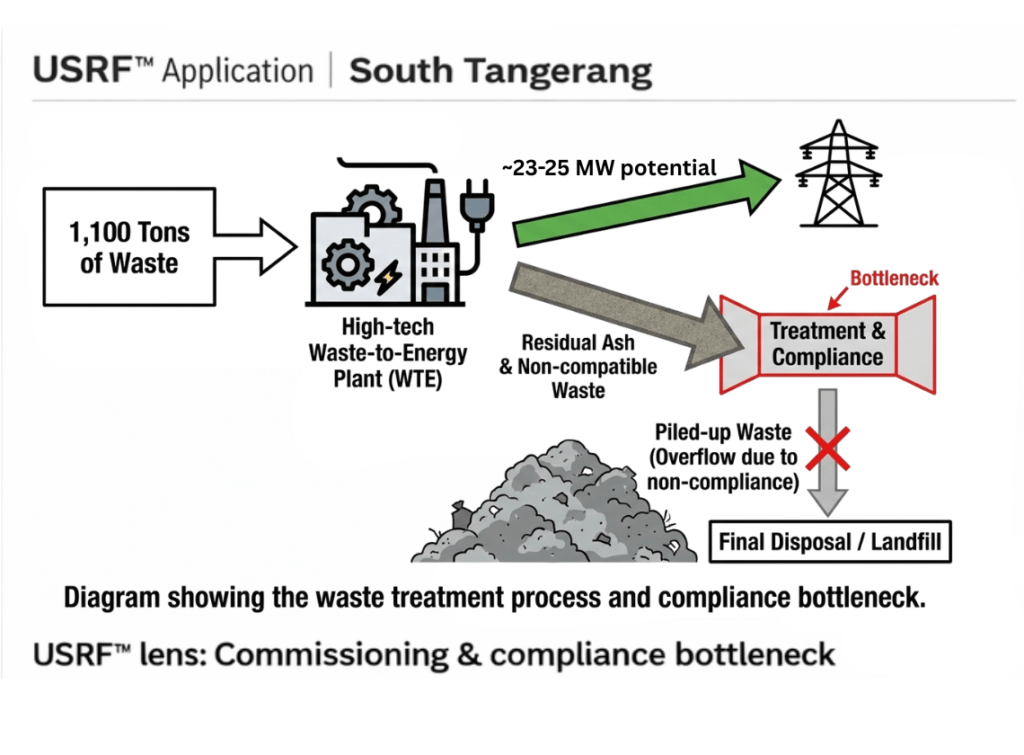
Starting move (verifiable) South Tangerang’s 1,100-ton/day waste-to-energy plant (23–25 MW) is scheduled to begin construction in early 2026, with stable commercial operations targeted within three years (2028–2029). In an earlier preview, we highlighted water reliability as a potential constraint—especially depending on siting and process design. In this profile, USRF™ prioritises what most often binds first in practice: commissioning stability and downstream interfaces.
System interaction (USRF™ lens) The headline is “waste.” The constraint path is often elsewhere: stable commissioning → compliant operations → residual pathways. Thermal WtE plants transform the waste system; they do not remove the need for tight operational control and downstream handling capacity.
Thresholds (observable tripwires)
- Commissioning threshold: does the facility reach continuous stable operations (not just “built”)? If commissioning stretches, the city remains in interim disposal/logistics mode longer than planned.
- Compliance interface threshold: if emissions-control tuning and process-treatment interfaces (including water supply and wastewater/process discharge where relevant) are not locked early, expect forced derating, redesign cycles, and O&M volatility.
Residual pathway threshold: if ash and non-compatible stream pathways are not operationalised in parallel, the landfill burden does not disappear—it becomes a “capacity tail”.
Most likely outcome (12–24 months) Visible construction progress in 2026–2027, but the decisive differentiator will be whether the plant reaches stable, compliant operations and resolves downstream handling in parallel. If either lags, the binding constraint will be operating reliability and downstream capacity.
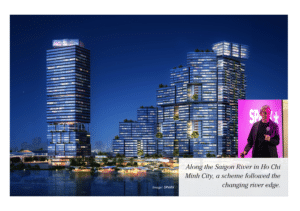
2) Ho Chi Minh City: Flood-control Performance Constrained by a Subsidence-shifting Baseline
USRF™ profile strip
- Constraint pathway: Flood-control assets → Baseline shift (subsidence) → Uneven protection outcomes
- First binding interface: subsidence-driven baseline decay + operations/coordination
- 12–24 month outlook: partial improvement is plausible; hotspots persist where baseline shift dominates
Starting move (verifiable) HCMC has restarted trial operation of its tidal flood-control project (2 Feb 2026). Phase 1 covers ~570 km² and aims to protect ~6.5 million residents. Components are being put into use as finalised, with full completion still targeted for 2026.
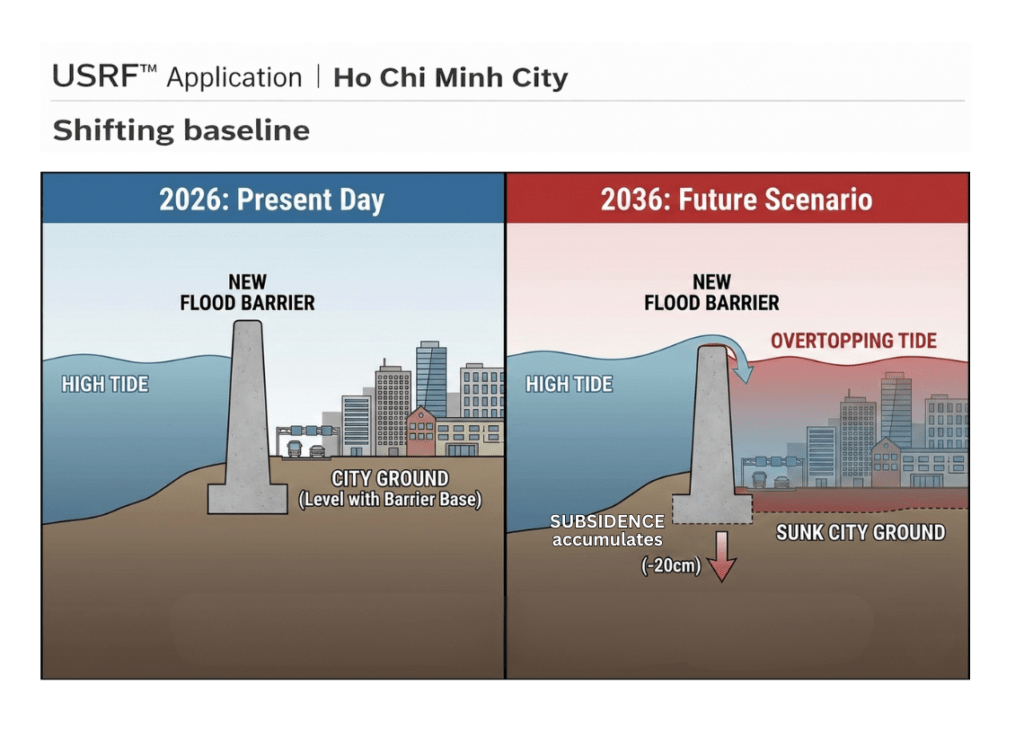
In parallel, land subsidence continues at averages of 2–5 cm/year, with 7–8 cm/year (and locally higher) in high-rise and weak-soil zones.
System interaction (USRF™ lens) This is a classic baseline problem: flood-control systems are designed against an assumed ground and water-level reference. When the ground drops faster (and unevenly), the system’s effective protection level decays—producing uneven outcomes even after major assets come online.
Thresholds (observable tripwires)
- Subsidence persistence threshold: continued multi-cm/year subsidence in hotspots will drive rising maintenance burdens and persistent performance gaps despite new assets.
- Completion-to-operations threshold: if coordination remains fragmented, volatility stays elevated; even with completion, protection will still vary across districts as the baseline shifts.
Most likely outcome (12–24 months) Partial improvement with persistent hotspots, because subsidence shifts the baseline faster than fixed infrastructure can lock in uniform protection.

3) Chennai: Reliability Constrained by Distribution Transferability (not only supply)
USRF™ profile strip
- Constraint pathway: Supply diversity → Distribution rigidity → Localised reliability failures
- First binding interface: inability to transfer water between systems during shutdowns/maintenance
- 12–24 month outlook: resilience improves “on paper”; reliability remains uneven until interconnection becomes operational
Starting move (verifiable) A 13 Jan 2026 Tamil Nadu government press release explicitly states that Chennai’s current limitation is the lack of provision to transfer water between different systems—source shutdowns still affect served areas even when adequate water exists elsewhere. In-principle approval has been granted for the Ring Main System (RMS) as the remedy.
System interaction (USRF™ lens) Chennai’s binding pathway is transferability and operational coordination, not merely total supply. A city can add sources and still experience sharp, localised disruption if its network cannot reroute flows quickly.
Thresholds (observable tripwires)
- Transferability threshold: until RMS materially improves inter-system transfer, zone-level disruptions will continue during maintenance/outages.
- Operational coordination threshold: once interconnection exists, resilience will depend on how quickly operators can reroute and stabilise delivery.
Most likely outcome (12–24 months) Improving resilience on paper while uneven reliability persists at zone level until the RMS becomes operational and is managed coherently.
The Common Pattern (and what USRF™ is designed to surface)
In each case, the visible intervention is not where the binding constraint resides. The real bottlenecks sit one layer deeper:
- South Tangerang: delivery may be visible; operational stability and downstream capacity decide performance.
- HCMC: flood-control assets matter, but baseline shift (subsidence) drives uneven outcomes.
- Chennai: supply diversity exists, but transferability and coordination determine reliability.
In February 2026, The Future Atlas begins a series applying USRF™ across urban contexts—focusing on where constraints bind first, how pressure propagates, and which thresholds practitioners can track over time.
Key Sources
- Tempo.co
- Indonesia Business Post, Danantara updates
- Tamil Nadu Government news
- The Hindu
- Vietnamnews.vn
- VietNamNet
- VNExpress
- Continue Reading