-
Interview/
Sustainability
Exclusive Interview: Vicky Chan on Designing for Real Need
A lightly edited transcript of a Zoom conversation with Vicky Chan, founder of Vicky Chan + Partners.

- Candice Lim
Award-winning architect Vicky Chan has worked across architecture, landscape, sustainability, education and community-centred design. I first knew Vicky some years ago, when he was invited as a juror for an interior design competition, and I have long admired the sense of purpose he brings to his work. We reconnected for this conversation, in which he reflects on why some of the most meaningful projects in his practice today are smaller, quieter and closely tied to real social need—and how that has changed the way he thinks about architecture, sustainability and success.
Designing for people who are usually overlooked
Q: In your recent message, you mentioned being involved with a number of smaller projects in the background, including nonprofit work. What has drawn you to that scale and type of project at this point in your practice?
VC: From the beginning, our practice has always wanted to create impact and help people. We understand that architecture can become a tool that transforms regular people’s lives, and more so, that some of our work can be especially influential for people whose spatial experience really needs to be different.
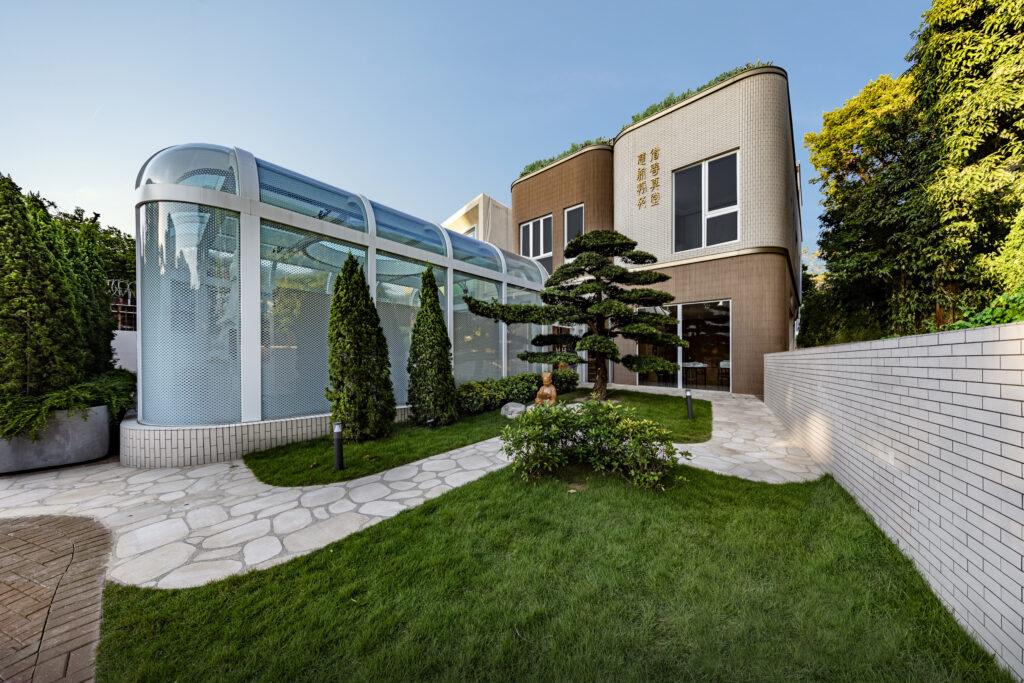
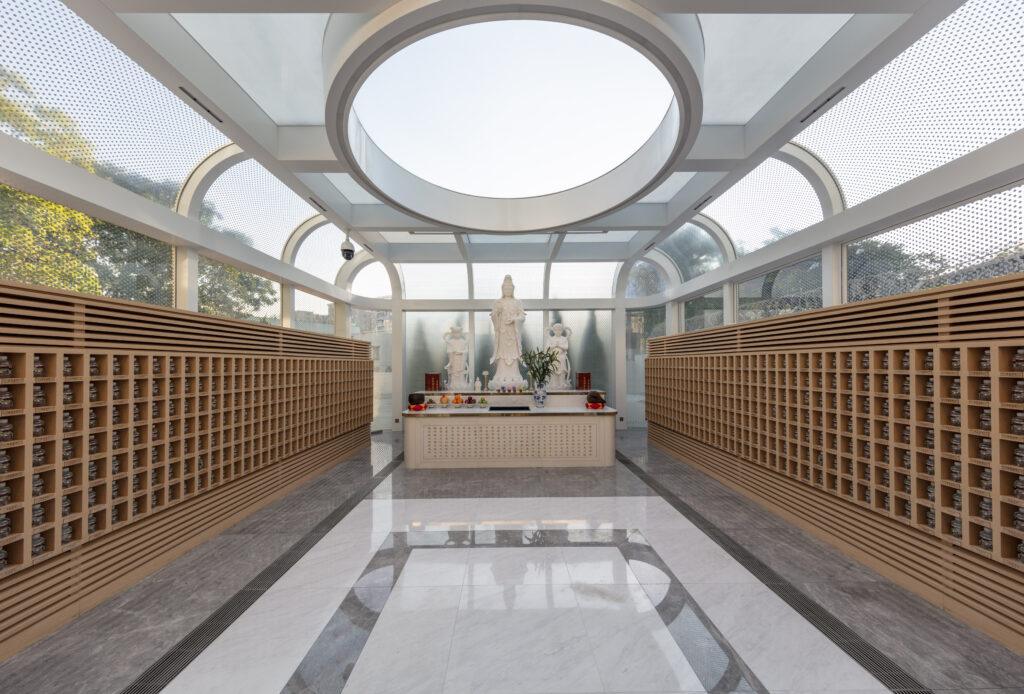
So the kinds of projects we have chosen to focus on for nonprofit clients—elderly centres, community centres for grassroots neighbourhoods, homeless animal shelters—these are the kinds of projects that provide much-needed space to fill a gap in the community. Some of them are in China, but recently many of these projects have been in Hong Kong.
As architects, we normally believe our expertise should be put to the right purpose, and there is a kind of pride and joy in fulfilling that stereotypical destiny of the architect—to really help people. In a way, this is how we get to do that: to cater to society and fill a gap that other projects have not been able to address yet.
At the same time, it is not that we do not do larger projects. But we discovered that our team is very effective in dealing with clients on a low budget—the kind of people who normally cannot afford an architect. We are willing to lower our fee to something they can accept, while still providing a dignified and workable solution. That is how we really feel we are filling the gap, and that is how we have ended up with many of these projects today.
It does not sound intuitive, but just because we charge a very low fee does not mean our service is lowered because of it. NGOs that do not have a lot of money are not looking for something hyper-fancy. They are not looking for luxurious interiors, exteriors or landscape. They just want their idea to serve its purpose. If the project is for homeless animals, or for people in grassroots areas, or for the elderly, they have a very specific agenda they want to meet. We just have to listen to that agenda and find the right design balance that fits their budget and timeframe and still delivers.
So it takes tremendous self-discipline to make sure our team does not lose focus, because all of us as designers like to draw a little more, make a few more changes here and there, and feel useful. But sometimes, with these projects, the purpose is really to serve the client’s vision. If they are trying to help the elderly, then we just have to find how to achieve that agenda with them, without making it too much about me or my team. It is really about using our skills and expertise to transform the space into their vision.
That is why many of these projects are really small—they are often smaller NGOs filling gaps in different neighbourhoods. But it is very meaningful. I love it when a client says, “Thank you—you really delivered what we needed.” In that moment, I feel so much like a real architect. People are not saying, “Wow, this is beautiful.” They are saying, “Wow, thank you—we needed this.” That is a tremendous feeling for me as an architect.

Q: Do these community and nonprofit projects come with a different kind of responsibility from more conventional commercial work?
VC: Yes. With community projects, I think the responsibility is different. We recently finished a community centre for YMCA, which is a well-known organisation. Even in the nonprofit sector, things are changing. People are expecting technology, AI and all kinds of new tools and experiences.
The question is how to figure that out with limited money. If resources were not a concern, they could simply buy everything. But they cannot. So they have to choose the kind of technology that really suits the centre and the people they want to serve.
What we did there was quite a bit of survey work and workshops with the people who were actually going to use the centre. We asked them how they thought the space should be defined and what kind of new experience would really benefit them. Eventually, we created a media wall in the middle of the space. Many of them were already involved in video generation and content creation, so they wanted a larger screen that would allow them to perform, make videos and create content at a low budget.
That became the story at the centre of the project—a kind of stage with a media wall that the community could use and rent at an affordable price, so they could create the newer kinds of services or content they were interested in.
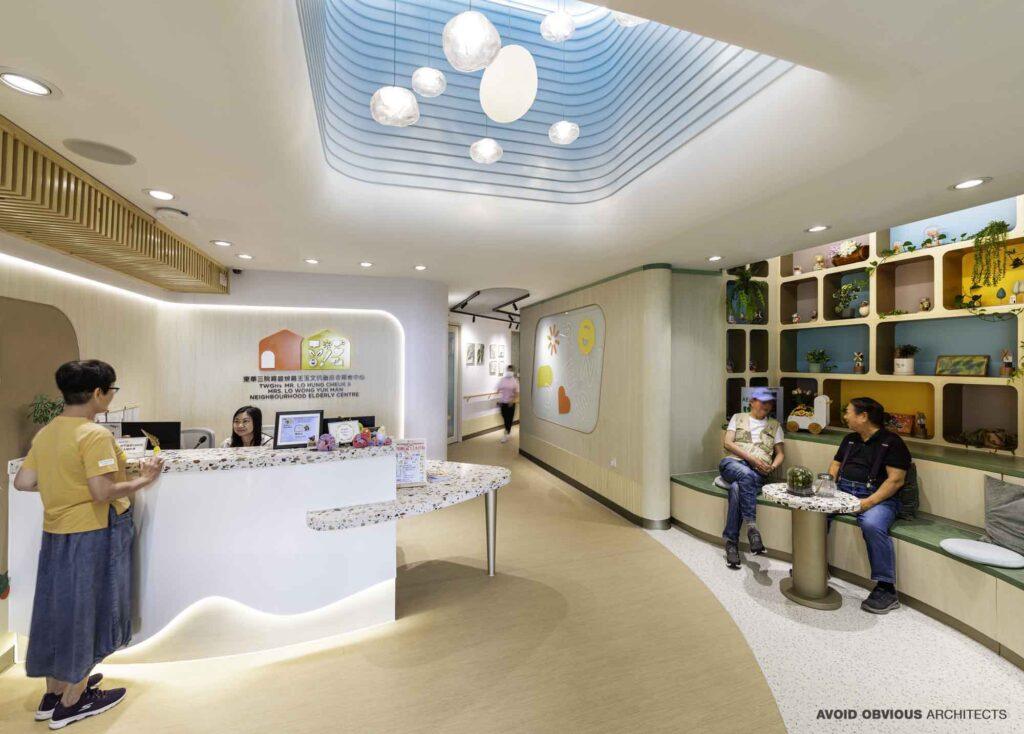
We did a very similar exercise with another nonprofit stakeholder, this time for an elderly centre. That became a really fruitful and unconventional learning curve for me. When I used to think about an active lifestyle, I would think about people jogging, exercising, going to the gym. That is still true, of course. But when I asked elderly users how they fit into that, the answer was very interesting. They said it was really not about getting on a treadmill to exercise. It was about finding a friend who could do it with them.
Through the workshop, they taught me a really important lesson: the focus of the centre should not be on fitting all these fancy treadmills and exercise machines into the gym, but on creating a space where friendship could allow people to come together and exercise.
So what we ended up doing was putting the kitchen at the centrepiece, not the gym. The kitchen was the place where they could meet friends, cook together, eat together, and become friends with other people. If they knew enough friends, they felt they could then exercise together, and that led to a healthier lifestyle.
It sounds simple, but for me it was a very interesting process. I realised I did not have to take the idea of “active lifestyle” so literally. I had to position it in a way that allowed friendship to build up, and that would then essentially lead to a healthier lifestyle. I loved learning from them and creating a space that responded to how they imagined that experience working in their later life.
“People are not saying, ‘Wow, this is beautiful.’ They are saying, ‘Wow, thank you—we needed this.’”
Listening instead of dictating
Q: Your work suggests that architecture can shape behaviour and relationships, not just provide space. How has that changed the way you approach projects?
VC: For me, I love that my projects can create an influence, and that influence can help people in their daily lives—and sometimes animals too, with the animal shelter we are building.
But in the process of doing that, I have learned not to become a dictator. A few decades ago, architects liked to see themselves as the master planner, the lead voice of change, the critical director of the project. As I have got older, I have realised that different NGOs have different visions, and I learn so much from them by seeing their own methods of delivering that vision.
So I have had to stop trying to become the dictator or the director of the project. As a professional, I have to take the knowledge and vision they already have and transform them into physical elements that help them continue to deliver. That, to me, is what has changed my approach quite a bit. I am not telling them how they should use the space. I am listening, and then using my expertise to transform what they want into something tangible.
That is a big shift, because even today many famous architects are still more centred on themselves and their own style. For me, I have let go of that completely. I let the client and their vision of how they want to help society guide the style to some extent, so the two can work together.
A simple example is farming. Some clients want to do traditional farming, and in one case it might be enough just to give them planters. But in another case, a school I was helping said kids are not into farming unless you make the experience scientific and fun, so they understand it is not only essential work, but also experiential and important to learn from.
So for that kind of project, we listened to the teachers and integrated different science tools—even robotic watering tools and similar features. The category of project is exactly the same. The end result is still green, it is still farming, and it is still a sustainable project. But one vision is more relaxed and hands-on, while the other is more about scientific control and helping children understand the biology of the plant.
That is how I have changed. I am not dictating the result. I know the tools available to me as a landscape designer, and once the client makes their vision clear, I take those professional tools out and help them find the right solution that works for them.
Sustainability that people can actually live with
Q: You have worked across architecture, urban design, farming, education and walkability. What ties these strands together for you now?
VC: At the very beginning, I think I was more interested in using sustainability as a way to transform the built environment. But as I have grown into my current practice, I realised sustainability is now mandatory—it is a must. We just recently completed another BEAM Plus Platinum project in Hong Kong.
At the same time, I have learned that it is also about the ongoing healthiness and financial sustainability of the project, so that those initial sustainable ideas can actually be sustained over their life cycle.
So I have learned to be more sensible—not just about sustainability in principle, but about whether people are going to get tired of maintaining certain ideas if I make them too difficult. Recycling is a good example. It sounds simple, but recycling can be difficult in a community centre where many people are doing different things. It can get messy very quickly and undermine the whole process.
In the end, we have to be sensible and say: I know we can recycle everything, but let us focus on the key things that you can actually keep doing year after year without messing it up. I have toned myself down. I am no longer trying to be harsh and say, “You only recycle four items—that is nothing.” If a place can consistently recycle paper, metal and glass for years as part of its daily operation, that is already an achievement.
As I get older with my practice, I have learned to become more sensitive to operation, to reality, to people. People get tired. People want to take a break. So I take that into account, and it changes my project attitude.
Walkability is also interesting to me for the same reason. Five or six years ago, I was very vocal in saying we needed a specific law to stop traffic so we could pedestrianise a downtown area. I campaigned for that strongly. But as I got older, I realised government people were trying to tell me something I was not hearing. They said: actually, sometimes it is easier if people just do it, without waiting for a law.
One person pointed to a very down-to-earth grassroots area and said: look, people already walk here even though technically it is illegal. They have done it year after year, and drivers already know not to go too fast. It has become normal through use.
That changed my approach. I realised it can be useless to go around harshly telling people everything they have to change. Sometimes it is easier to take a more relaxed approach: if I want change, let people do it. If they do it often enough, you do not necessarily need a law to legitimise it. People will begin to let it be, and the change can happen without so much confrontation.
So across all my projects, as I get older, I think I have adopted a more sensible approach: still achieving the agenda, but without trying to fight everyone along the way.
Q: When you approach a project now, what do you tend to look for first?
VC: I think all of them matter together. But it is an interesting question, because my studio has committed itself to an agenda: that once our projects are completed, they should serve a specific number of people. Every year we keep track of the number of people that our community centres and different kinds of projects are serving annually.
So if there are projects that are especially needed and able to serve more people, we put more effort into making them real, because they help us achieve that agenda. For the last two years, and this year as well, we are on track to serve half a million people.
For a larger architectural firm, that might not sound like much. But for my small practice, I am very proud that half a million people are able to enjoy our design and the spaces we provide.
In terms of selecting clients, in a way I do not really select them. I am not that famous, but I am known among NGOs for this kind of work, so they come to me looking for ideas, proposals and fee proposals. The people who usually come to us are already the kind of people we enjoy working with. Word of mouth is already doing the filtering. So once I know the mission, most of the time it is a match.
Commercial clients do come to us too, but usually they also come with a vision. We completed a very small chocolate shop—they sell peanuts, nuts and chocolate—but the owner was very focused on trying to make it one of the most sustainable ways to sell chocolate, snacks and food. She was a big fan of well-being and sustainable ideas. That is why she came to us, because she knew that was something I cared about.
So people who know me already know what they want from me, not just the design. In many cases I do not have to overthink it—it is already a good match.
There are still other projects we say no to. Some luxury clients do come to us. If they have a good story, we may still help them—because to sustain the team, we also need income. But the agenda and the type of service become very different. I would say only perhaps five per cent of our clients are like that. Ninety to ninety-five per cent of our work is schools, institutes and nonprofit organisations.
“If in 30 years people are still saying good things about what I did 20 years ago, then that, to me, is real success.”
Redefining success
Q: Have these quieter, less visible projects changed your own definition of success as an architect?
VC: Yes, very much.
I have built some well-known projects before, and I enjoyed the publicity at the time. When people say, “Wow, you are a great architect,” of course that feels good in the moment.
But as I got older, I saw something in the relationship between older clients and architects that stayed with me. I once heard a client speaking about another master architect. She said he had designed her apartment 30 years ago, and after 30 years the apartment and everything inside still worked beautifully.
To me, I thought: wow, that is true sustainability. If I am good enough as an architect, then my work should still be functional and beautiful after 30 years.
So the kind of success I define today is no longer the fame or money I get at the time a project is completed. It is more like this: if in 30 years people are still saying good things about what I did 20 years ago, then that, to me, is real success.

Why older buildings matter more now
Q: What kinds of overlooked projects do you think architects should be paying more attention to now?
VC: I think projects that revitalise old buildings deserve much more attention. They are not exactly overlooked, but they are more difficult. If a client has the money to build a new project, sometimes it is simply easier to start from the ground up than to inherit an older building that may or may not be fully usable.
But I strongly believe we have already built so much. At least for me, travelling around Asia, it is very apparent that in city after city I see so many empty high-rises, empty houses, and brand-new buildings that are not fully used. I saw it in Vietnam, in Singapore, in China—everywhere.
I feel architects probably do not need to build so many new buildings anymore. There are already too many. It is time for us to really look at what we have already built and ask how we can change and adapt those spaces so that we do not keep wasting unnecessary carbon footprint, but instead use what is already there for current needs.
For young architects, unfortunately it is much easier to be attracted to a brand-new museum or landmark project because it is exciting. But I think the beauty lies in learning to look at revitalisation and renovation differently. That comes with a different sense of responsibility—especially in how we control our carbon spending—and in being able to say: maybe this is enough, and maybe we can work with what we already have built and still serve the same population.
In many parts of Asia, population growth has already plateaued. We do not necessarily need that much more space. We need spaces to change for our current needs.
Q: Before we close, is there anything else you would like to add—perhaps something for younger architects?
VC: Yes. I mentor younger architects, and recently a school asked me to come up with something that might encourage them to continue in design. Looking back on my own journey, I think we just have to keep consistently working on the same problems. As architects or designers, sometimes it may take decades before we see the result of the changes we want.
In the age of technology and AI, we expect everything to be instant. But I want the younger generation to be more patient. I can see it in my own life: some of the ideas I had as a student 20 years ago are only being built now. I feel good about that, but it did take me 20 years.
I have seen many brilliant people start an idea and give up after maybe two years. I always think: if they could just keep at it for another 20 years, it would be amazing to see those good ideas actually get built.
Vicky Chan is a licensed architect in New York and the founder of Vicky Chan + Partners, established in 2012 with offices in New York and Hong Kong. His practice focuses on sustainable buildings and community-centred projects, with the aim of improving quality of life for 500,000 people each year. As of 2025, his projects had collectively served 1.5 million people.
- Continue Reading